I confess that, in 1901, I said to my brother Orville that men would not fly for 50 years
June 28, 2013 § Leave a comment

“Graphics software is expensive but Excel comes pre-installed in most computers,” explained Horiuchi. read more
PHOTOGRAPH: Cari Ann Wayman
We may take advantage of this pause in the narrative to make certain statements
June 27, 2013 § Leave a comment

When retainer attorneys employed by Big Deals send out scary cease and desist letters to nobodies on behalf of their Super Important clients, it’s typically a pro forma matter.
That is to say, they don’t expect to hear back.
And they certainly don’t expect the Small Fry recipient to lawyer up and send out a takedown letter of his own.
But that’s exactly what happened in Jake Freivald v. West Orange.
Freivald, a resident of the northeastern New Jersey township, had been running the practically nonexistent website westorange.info as a place to provide anyone who happens to get lost while looking for porn with a no-frills way of finding information on the place where Thomas Edison once lived.
“It doesn’t look like a site that’s sponsored by West Orange in any way, shape, or form — unless the town hired middle schoolers to create its online presence,” writes Staci Zaretsky at Above the Law.
Nevertheless, the township still saw fit to sic its attorney, Richard D. Trenk, on Freivald, claiming his “use of the Township’s name…is likely to cause confustion [sic], mistake or to deceive the public and may be a violation of the Township’s federally protected rights.”
Trenk’s cease and desist demanded that Freivald shut down his site, and “that you cease all current and future use of the Info Domain, or anything else confusingly similar thereto.”
In response, Freivald hired Stephen B. Kaplitt, who in turn responded to Trenk’s letter with the following work of art, which will no doubt be submitted to NASA for inclusion in the next Voyager Golden Record… read more
ART: Edward Hopper
Schollers are pryed into of late and found to bee busye fellows, disturbers of the Peace. Ile say no more
June 26, 2013 § Leave a comment

You can think of this as what the eye would see if we put all the light in the Universe through a prism to produce a rainbow. The intensity of the color is in proportion to it’s intensity in the Universe.
So what is the average color? i.e. the color an observer would see if they had the Universe in a box, and could see all the light at once (and it wasn’t moving, for a real observer on earth, the further away a galaxy from us the more it is redshifted. We have de-redshifted all our light before combining).
To answer this question we must compute the average response of the human eye to these colors. How do we express this color? The most objective way to is quote the CIE x,y values which specify the color’s location in the CIE chromaticity diagram and hence the stimulus the eye would see. Any spectrum with the same x,y must give the same perceived color. These numbers are (0.345,0.345) and they are robust, we have calculated them for different sub-samples of the 2dF survey and they vary insignificantly. We have even computed them for the Sloan Digital Sky Survey spectroscopic survey (which will overtake 2dFGRS as the biggest redshift survey sometime in 2002) and they are essentially the same.
But what is the actual color? Well to do this we have to make some assumptions about human vision and the degree of general illumination. We also need to know what monitor you, the reader, are using! read more
PHOTOGRAPH: M John Harrison
I haven’t even got the courage of my lack of convictions
June 25, 2013 § Leave a comment
SP You’ve contrasted your writing with your psychoanalytic practice. What is the relationship between the two?
AP I really don’t know. All I do know is that I do psychoanalysis four days a week and I write one day a week, in the middle. I know that the conversations I have with people have a very powerful effect on me. Psychoanalysis is really difficult; writing is not, for me.
In psychoanalysis, I’m dealing with resistances, often with very intractable things. In a way, the connection between the two things works by being indiscernible, by not being articulated or thought about very much. As you may have noticed, I don’t use clinical vignettes, because I think psychoanalysis is private. So when I do use them, either they’re minimal, anonymous, or I make them up. And I don’t find myself interested in topics, exactly. I’m more interested in the sentences, as they unfold, that are nominally about something.
I was very wary of the way in which the psychoanalytic profession secluded itself, made itself rather mandarin and elitist. So I wanted to be seen to be part of the cultural conversation, something not mysterious—I mean, life is mysterious—that in and of itself is a social practice that can be talked about.
SP Over time your writing has become more political, more pointed. Do you have hope for an impact in the cultural conversation or even public policy? Is there something that you’d like your books to do or change?
AP I’ve always been embarrassed by the self-importance of psychoanalysts talking about the world as if they were going to have some major influence on it. Back when I was trained, my supervisor said to me, completely seriously, “If only they had child psychotherapy in Northern Ireland, their troubles would have been over years ago.” Now, for me, this represents the absurdity and grandiosity of psychoanalysis. The people who actually have some effect on public opinion are business people and journalists, with politicians somewhere in the middle of those. I can only seriously ironize myself in relation to this. I think of the books as more like dream work than propaganda.
I don’t write for psychoanalysts but for people who are interested in a whole range of things. My wish, if I could design it, is that my books would in some indiscernible way evoke something in those who come across them. People wouldn’t come away thinking, Oh, Phillips’s theory of X is X. The reading experience would have a nonprogrammatic effect, but an effect.
SP Paul Holdengräber’s interview with you at the New York Public Library began with his observation that he could never actually remember anything that you write. Maybe it was a deliberate provocation, but that’s how I experience a lot of your work.
AP That’s the reading experience I’ve always loved. Certainly, when people say to me, as they often have done, “I can’t remember anything afterward,” I think, Great, that’s the point! The work is not there to be repeated or identified with, but something works on you. read more
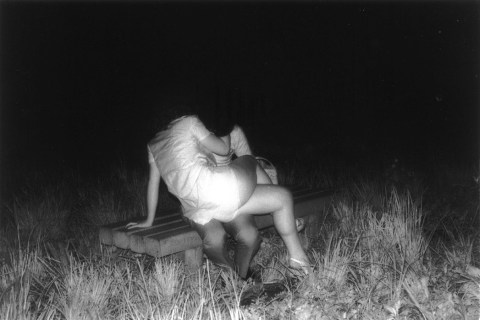
PHOTOGRAPH: Kohei Yoshiyuki
I remember it but actually no autumn that black dusk toward the post office
June 24, 2013 § Leave a comment

For the United States, it’s in the middle of a Quebecois forest. Hong Kong’s is near Wuhan, in the heart of China. France’s is in France. The average destination of a nation’s international flights reveals its migratory bias, nearby tourist attractions, and the countries with which it does business.
Quartz calculated the average international destination and point of origin for every country in the OpenFlights database with at least five outbound routes. The result is a picture of how each country contributes to the balance of global air travel. read more
ART: Manuel Fernandéz, Francoise Gamma, Kareem Lofty, Chris Timms
The much quoted claim that he photographed ‘to find out what something will look like photographed’ became, effectively, ‘to not bother finding out what something will look like photographed, to photograph for the sake of photographing’
June 21, 2013 § Leave a comment

“At least one human being alive in the year 2000 will still be alive in 2150.”
Predictor: Peter Schwartz. Challenger: Melody K Haller.
STAKES: $2000 will go to Chabot Space and Science Center if Schwartz wins, or Accion International if Haller wins. read more
ART: Jasper Johns
Anyone who sleeps sleeps heroically
June 19, 2013 § Leave a comment

“The so-called ‘wormholes’ found in wood — including furniture, rafters, oak floors, and woodblocks that were used to print art in books — are not made by worms as the word suggests; rather, most are ‘exit holes’ made by those newly transformed adult beetles boring up to the surface and flying away,” Hedges said.
When these wormholes were present in an artist’s woodblock, they resulted in empty circles within the inked prints made from the woodblock. “These tiny errors or interruptions in the print serve as ‘trace fossils,'” Hedges said. “They aren’t the animals themselves but they are evidence of the animal’s existence. They show that beetles invaded a particular piece of wood, even if that wood no longer exists.” Hedges added that studying the prints, rather than the much rarer woodblocks themselves, provides better and more accurate information. A piece of wood can acquire new wormholes throughout the years, and it is difficult to know whether a particular hole was made 10 years ago or many centuries ago. Even a museum specimen that has been protected in recent years could have wormholes from beetles that landed on it just a few years prior to its arrival in the museum.
“By studying printed wormholes, we are seeing only the wormholes that were made at a specific moment in history,” Hedges said. “Because most prints, including those in books, have publication dates, we know that the wormholes in question were made very close to that date, or at least between that printing and the first printing. It’s an almost perfect biological timestamp. And in most cases, we also know where the book was printed. For example, if printed wormholes appear on a print made in Bamberg, Germany in 1462, then we know that the beetles that made the wormholes in the corresponding woodblock must have lived in or around that place at that time. So wormholes can tell us when and where a species existed with fairly good accuracy, more than 500 years ago, and that is amazing.” read more
PHOTOGRAPH: Susannah B
If at first you succeed, then what?
June 18, 2013 § Leave a comment
It is sometimes argued that the US government must be dependent on commercial bank money to fund its various activities and public enterprises, because the US Treasury holds some deposit balances at commercial banks. But I believe this is a seriously misleading claim. The government is certainly dependent on private sector economic activity and finance in a more general sense: if there were less private sector economic activity, there would be correspondingly fewer goods and services produced by our society, and thus fewer real assets that the government could make obtain and make use of to carry out its own activities. But the government is not financially dependent in any fundamental way on commercial bank deposit liabilities to carry out government spending.
To see this, let’s first look at a simplified picture of Treasury taxing and spending, before moving to the more detailed and accurate picture. The US Treasury has an account at the Fed called the “general account,” and that is the account from which it spends. Suppose I have an account at Maple Valley Bank from which I pay a $2000 tax obligation to the US government. Here’s the simplified picture: I send a check to the government, and as a result of the check being cleared $2000 is transferred from Maple Valley Bank’s Fed account to the Treasury general account. At the same time, my deposit account balance at Maple Valley Bank is reduced by $2000 and so Maple Valley Bank’s debt to me is reduced by $2000. Thus, Maple Valley Bank has lost both a $2000 asset and a $2000 liability, and experiences no net loss or gain. But the US Treasury now has $2000 more and I have $2000 less. The Treasury then spends that $2000 by buying $2000 worth of sticky note pads from Acme Office Supplies, a company which banks at Old Union Bank. After the various payment operations are completed, Acme’s account at Old Union has $2000 more in it, and $2000 has been transferred from the Treasury general account to Old Union’s reserve account at the Fed.
Now here’s the more accurate picture: In practice it has been found that conducting government operations in the way just described results in undesirable volatility in bank reserve balances, which interferes with the central bank’s ability to implement its target rate for interbank lending: So the government has introduced Treasury Tax and Loan (TT&L) accounts. TT&L accounts are US Treasury accounts at commercial banks designated as TT&L depositories. Suppose Ridge Bank is such a depository. Then when I send my $2000 check to the government, it may deposit it in its TT&L account at Ridge Bank. As a result, $2000 is transferred from Maple Valley Bank’s Fed account to Ridge Bank’s Fed account. At that point, no reserves have left the banking system. But as the Treasury spends over time, it continually transfers money from its TT&L accounts to the general account, and then spends from the general account. As that happens, central bank liabilities first leave commercial bank reserve accounts and then go back into those accounts after the Treasury spends.
Clearly there is no fundamental difference between the simplified system and the more complex system that uses the TT&L accounts as monetary way stations. The TT&L accounts exist solely to smooth out the flow of central bank liabilities to and from the Treasury general account and commercial bank reserve accounts. There is no sense in which the Treasury needs the commercial banks to “create” money in those accounts to carry out its taxing and spending operations.
In a broader sense it should be clear that, far from needing to acquire commercial bank liabilities in order to spend, the government doesn’t even need to obtain Federal Reserve liabilities from commercial bank reserve accounts in order to spend, and could alter the existing system if it so chose. The central bank is itself an arm of the US government and thus liabilities of the Fed held as assets by the Treasury are just amounts owed by one government account to another government account. read more
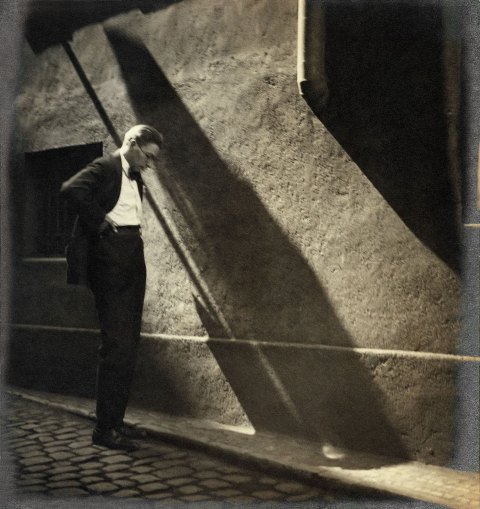
PHOTOGRAPH: Josef Sudek
“Are there pictures of you in magazines when you put on weight?” “No.” “Oh, so you’re not that famous.”
June 17, 2013 § Leave a comment
WASHINGTON—According to a new report released Thursday by the U.S. Census Bureau, by the year 2043, the majority of the American population will be composed of those people. “Based on future projections of childbearing, mortality rates, and net international migration, we can safely say that the number of those types in this country will double, if not triple, within the next 30 years,” said report co-author and Census statistical analyst Ken Shefner, adding that as the baby boomer generation begins to die off, Americans can expect to see “more and more of those kinds hanging around every day.” read more
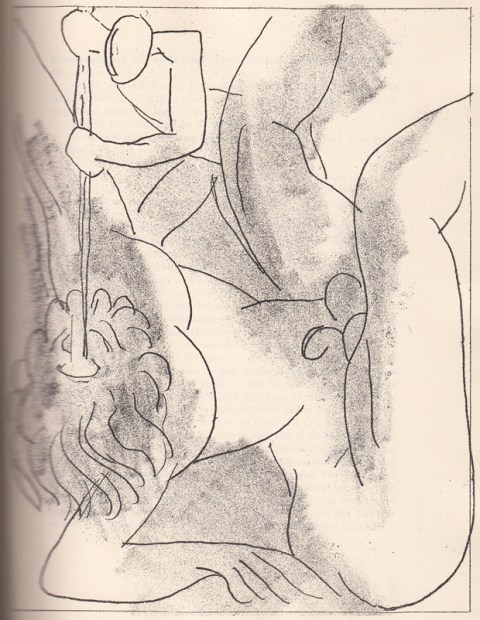
ART: Henri Matisse
 my nerves are bad to-night
