I give this book one star because the drone landed on my cat
December 3, 2013 § Leave a comment

If the government is in surplus, it means that the government is taking in more cash than it’s spending, which is the opposite of stimulus.
It’s also well known that the US trade deficit exploded during the late 90s, which means that ‘X-M’ was also a huge drag on GDP during his years.
So the trade deficit was subtracting from GDP, and the government was sucking up more money from the private sector than it was pushing out.
There was only one “sector” of the economy left to compensate: Private consumption. And private consumption compensated for the drags from government and trade in two ways.
First, the household savings rate collapsed during the Clinton years.
And even more ominously, household debt began to surge.
So already you can see how the crisis started to germinate under Clinton.
As his trade and budget policies became a drag on the economy, households spent and went into debt like never before.
Economist Stephanie Kelton expounded further…
“Now, you might ask, “What’s the matter with a negative private sector balance?”. We had that during the Clinton boom, and we had low inflation, decent growth and very low unemployment. The Goldilocks economy, as it was known. The great moderation. Again, few economists saw what was happening with any degree of clarity. My colleagues at the Levy Institute were not fooled. Wynne Godley wrote brilliant stuff during this period. While the CBO was predicting surpluses “as far as the eye can see” (15+ years in their forecasts), Wynne said it would never happen. He knew it couldn’t because the government could only run surpluses for 15+ years if the domestic private sector ran deficits for 15+ years. The CBO had it all wrong, and they had it wrong because they did not understand the implications of their forecast for the rest of the economy. The private sector cannot survive in negative territory. It cannot go on, year after year, spending more than its income. It is not like the US government…” read more
PHOTOGRAPH: Achille Volpe
When I saw him look at me with lust, I dropped my eyes but, in glancing away from him, I caught sight of myself in the mirror. And I saw myself, suddenly, as he saw me, my pale face, the way the muscles in my neck stuck out like thin wire. I saw how much that cruel necklace became me. And, for the first time in my innocent and confined life, I sensed in myself a potentiality for corruption that took my breath away
November 29, 2013 § Leave a comment
Rowlandson’s The Sovereignty and Goodness of God was originally published in Boston, then in London, in 1682. The text recounts Rowlandson’s eleven week captivity among a band of united Indian tribes from New England in 1675, during King Phillip’s War. The book went through three editions in its first year alone, becoming the first bestselling work published in the British American colonies. Since its fifth edition in 1720, the story of Rowlandson’s captivity has never been out of print in the United States.
A large portion of the text outlines Rowlandson’s relationship with God through the lens of her captivity, and affliction is a concept that runs throughout her writing. Affliction, as it is conceived within a religious context, deals mainly with the belief that God tests the chosen and the faithful in order to reinforce an individual’s reliance on religious conviction. Puritans like Rowlandson, who adhered to a Calvinistic model of Protestantism, considered affliction a blessing from God as it offered proof of God’s concern for a person.
In her last paragraph, Rowlandson explicitly connects her captive experience with the idea of affliction. She closes her text by writing:
Before I knew what affliction meant, I was ready to sometimes wish for it. When I lived in prosperity […] I should be sometimes jealous least I should have my portion in this life, and the Scripture would come to my mind, Heb, 12.6 For whom the Lord loveth he chasteneth, and scourgeth every Son whom he receiveth. But now I see the Lord had his time to scourge and chasten me. The portion of some is to have their afflictions by drops, now one drop then another; but the dregs of the Cup, the Wine of astonishment: like a sweeping rain that leaveth no food, did the Lord prepare for my portion. Affliction I wanted, and affliction I had, full measure (I thought) pressed down and running over; yet I see, when God calls a Person to any thing, and through never so many difficulties, yet he is fully able to carry them through and make them see, and say they have been gainers thereby. And I hope I can say in some measure, as David did, It is good for me that I have been afflicted.
While she positions herself as thankful for her relationship with God throughout her captivity, this argues that she and her readers should view her past pain as a blessing. She wanted affliction at one point in her life and it was given to her in spades, which makes her feel more knowledgeable and superior for having suffered. The status of this text would suggest others felt the same. read more
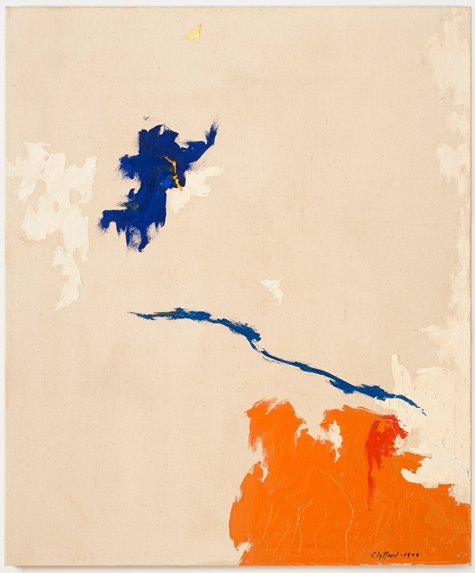
ART: Clyfford Still
I cannot hear what you say for the thunder that you are
November 28, 2013 § Leave a comment

Dear Mr. Maxwell,
I am dreadfully upset by the following coincidence. The Olympia Press (headquartered in Paris) are bringing out LOLITA, a novel of mine, on which I have worked for four years and which is scheduled to appear by September the 1st. Before I sold them the book, it had been seen by Viking, New Directions, Straus and Doubleday, and not only by their readers but also by the friends of their readers. There is a story entitled LOLITA in the last issue of The New Yorker by Dorothy Parker.
Please do find out if the term “coincidence” I have used above needs some qualifications; and in any case would you consider my contributing a note in regard to both Lolitas to your Department of Corrections and Amplification? Or any other appeal, complaint, yelp or distress? read more
PHOTOGRAPH: Delaney Allen
The English winter — ending in July, To recommence in August
November 27, 2013 § Leave a comment

The march toward gender-specific clothes was neither linear nor rapid. Pink and blue arrived, along with other pastels, as colors for babies in the mid-19th century, yet the two colors were not promoted as gender signifiers until just before World War I—and even then, it took time for popular culture to sort things out.
For example, a June 1918 article from the trade publication Earnshaw’s Infants’ Department said, “The generally accepted rule is pink for the boys, and blue for the girls. The reason is that pink, being a more decided and stronger color, is more suitable for the boy, while blue, which is more delicate and dainty, is prettier for the girl.” Other sources said blue was flattering for blonds, pink for brunettes; or blue was for blue-eyed babies, pink for brown-eyed babies, according to Paoletti.
In 1927, Time magazine printed a chart showing sex-appropriate colors for girls and boys according to leading U.S. stores. In Boston, Filene’s told parents to dress boys in pink. So did Best & Co. in New York City, Halle’s in Cleveland and Marshall Field in Chicago. read more
PHOTOGRAPH: Claire Mallett
First they ignore you, then they laugh at you, then they nick your terminology whilst draining all meaning from your ideas, then they win
November 26, 2013 § Leave a comment

What do you think of the word cuspidor? James Joyce said he thought it was the most beautiful word in English. Joyce was one of the poets who oftentimes cared more for melody than meaning.
List words that begin with the letters ”sn.” Don’t just about all have something to do with the nose?
Hardly anybody has even a little something decent to say about Willard L. Bundy. Too bad. After all, what he did goes back a long time. To 1888. That’s when he invented the time clock. But people don’t forget things like that.
Many, maybe even most, of Canada’s lakes still haven’t been named.
Q. Wasn’t it a comic strip cartoonist who dreamed up the girls’ name Sheena?
A. Sheena is the Scottish Jeanne. Since pritnear forever.
The temperature of your toes reveals the rate of your metabolism. Or so claim some medicos. Cold feet, low metabolism. Hot feet, high metabolism.
It’s said of Thomas Edison that he produced a patentable device – on an average – every two weeks of his life.
All the snakes in Tasmania are poisonous.
Q. It’s said the Mayans over 4,000 years ago in their blood rituals used the sharpest knives ever known. What were they made of?
A. Volcanic glass. Obsidian.
Lot of fishermen of the Aegean Sea bait their hooks with lemon peel. And say they do all right.
At least 100,000 people in Europe live all their lives on barges. read more
ART: Randall Munroe
They still talk about contextual. Ha!
November 25, 2013 § Leave a comment

As technology advances, the art world has turned to microscopic analysis and pigment testing to buttress — or challenge — the judgments of a tiny club of experts whose opinions have long been treated as law. This pursuit of scientific validation has only deepened as art historians and institutions like the Pollock-Krasner Foundation, which shut down its authentication board in 1996, retreat from certifying art for fear of being sued.
But science has its limits. Paint or paper may help establish the date of a work, while hair and fibers can help pinpoint where it was made. A work’s provenance must also be verified. Still, connoisseurs — as well as most auction houses who rely on them — maintain that true authorship cannot be established without an expert evaluation of the composition and individual strokes that reveal an artist’s “signature.”
In this case, the difference of opinion could be worth millions. Unauthenticated, “Red, Black and Silver” would be listed as “attributed to Pollock” and carry an estimate of no more than $50,000, said Patricia G. Hambrecht, chief business development officer at Phillips auction house, where the painting is consigned. If judged a Pollock, the painting’s estimated value would soar to seven figures, she said.
Ms. Kligman’s account of the painting dates to the summer of 1956 when she was 26 and living in Pollock’s house in East Hampton, N.Y., after Krasner, having caught the lovers together, sailed for Europe. Pollock was in an alcoholic tailspin and hadn’t painted in two years. As Ms. Kligman detailed in a new introduction to the 1999 edition of her memoir, “Love Affair: A Memoir of Jackson Pollock,” the artist was on the lawn when she brought him his paint and the sticks he used. After he finished, he said, “Here’s your painting, your very own Pollock.”
A friend of Ms. Kligman’s, Bette Waldo Benedict, has said Ms. Kligman told her the same story at the time.
Art forensics have primarily concentrated on what a painting is made of. But Mr. Petraco, who has decades of experience with the New York Police Department crime lab and is now a professor at John Jay College of Criminal Justice, looked at what the painting contained: the dust, hairs, fibers or other detritus that might have fallen on the surface and under the paint.
Because Mr. Petraco, who holds a Ph.D. in theoretical chemistry, has more experience analyzing red blood than red paint, he decided to perfect his technique for removing materials without damaging the painting by making some Pollock-like drip paintings in his backyard in Massapequa Park, on Long Island. (It’s tougher than it looks, he confessed.)
Despite what one sees on television crime shows, hairs and threads cannot be traced to a specific individual or sweater, Mr. Petraco said. What builds a forensic case is not any single piece of evidence but a combination of consistent factors. In this case, Mr. Petraco said the clincher was discovering a polar bear hair, a rare find in a country that has banned the import of polar bear products for more than 40 years.
“Is there a polar bear in this story?” Mr. Petraco wondered. read more
CHART: Gregor Smith
‘Would that suit your case? Would you not be always in pain then?’ asked the old man tenderly. ‘Right!’ exclaimed Miss Wren with another chop
November 22, 2013 § Leave a comment

The cessation was glibly attributed to the Great Fire: but in every other city in England the Plague ceased at about the same time
November 21, 2013 § Leave a comment

While virtually all mainstream economists believe in a long-term Say’s Law (supply creates demand, so the ultimate constraint on long term growth comes from the supply side), the real constraint on long-term growth in a developed capitalist economy is always on the demand side. (Note that there’s nothing new in the Summers/Krugman recognition of secular stagnation; David Levy called it a “contained depression” in 1991; Wallace Peterson announced a “silent depression” in 1994; and I demonstrated in 1999 that the problem is chronically constrained demand. At a recent Levy Institute conference in Rio, Paul McCulley laid out what he called a fundamental economic principle: Microeconomics and Macroeconomics are inherently different disciplines. Macro is demand-side; micro is supply-side. For any practical time horizon, demand always drives supply.)
I know what I’m saying is heretical, even though it is fully backed by all the data. And this stagnation is not due to a liquidity trap, or to a negative “natural” rate of interest. It is in the nature of the productivity of capitalist investment in plant and equipment. To put it in simple terms, the problem is that investment is just too damned productive. read more
PHOTOGRAPH: Antonio Olmos
I learned from my wives. Each one has something different to offer. Yours specialized at curling eyelashes. Did you even know that? You should have paid more attention to her. I know I did
November 20, 2013 § Leave a comment

The degree to which inauthenticity seems a new, technological problem is the degree to which I can sell you an easy solution. Reducing the complexity of authenticity to something as simple as one’s degree of digital connection affords a solution the self-help industry can sell. Researcher Laura Portwood-Stacer describes this as that old “neoliberal responsibilization we’ve seen in so many other areas of ‘ethical consumption,’” turning social problems into personal ones with market solutions and fancy packaging.
Social media surely changes identity performance. For one, it makes the process more explicit. The fate of having to live “onstage,” aware of being an object in others’ eyes rather than a special snowflake of spontaneous, uncalculated bursts of essential essence is more obvious than ever — even perhaps for those already highly conscious of such objectification. But that shouldn’t blind us to the fact that identity theater is older than Zuckerberg and doesn’t end when you log off. The most obvious problem with grasping at authenticity is that you’ll never catch it, which makes the social media confessional both inevitable as well as its own kind of predictable performance. read more
PHOTOGRAPH: Itami Go
Fictions can degenerate into myths
November 19, 2013 § Leave a comment

Many multilinguals report different personalities, or even different worldviews, when they speak their different languages.
It’s an exciting notion, the idea that one’s very self could be broadened by the mastery of two or more languages. In obvious ways (exposure to new friends, literature and so forth) the self really is broadened. Yet it is different to claim—as many people do—to have a different personality when using a different language. A former Economist colleague, for example, reported being ruder in Hebrew than in English. So what is going on here?
Benjamin Lee Whorf, an American linguist who died in 1941, held that each language encodes a worldview that significantly influences its speakers. Often called “Whorfianism”, this idea has its sceptics, including The Economist, which hosted a debate on the subject in 2010. But there are still good reasons to believe language shapes thought…
Greeks are very loud and they interrupt each other very often. The reason for that is the Greek grammar and syntax. When Greeks talk they begin their sentences with verbs and the form of the verb includes a lot of information so you already know what they are talking about after the first word and can interrupt more easily.
Is there something intrinsic to the Greek language that encourages Greeks to interrupt? Consider Johnson sceptical. People seem to enjoy telling tales about their languages’ inherent properties, and how they influence their speakers. A group of French intellectual worthies once proposed, rather self-flatteringly, that French be the sole legal language of the EU, because of its supposedly unmatchable rigour and precision. Some Germans believe that frequently putting the verb at the end of a sentence makes the language especially logical. But language myths are not always self-flattering: many speakers think their languages are unusually illogical or difficult—witness the plethora of books along the lines of “Only in English do you park on a driveway and drive on a parkway; English must be the craziest language in the world!” read more
EMOTICONCISION: Alexander Mills
 my nerves are bad to-night