And now a bubble burst, and now a world
June 14, 2013 § Leave a comment

Research investigating overprecision typically involves asking people to come up with a 90% confidence interval around a numerical estimate — such as the length of the Nile River — but this doesn’t always faithfully reflect the judgments we have to make in everyday life. We know, for example, that arriving 15 minutes late for a business meeting is not the same as arriving 15 minutes early, and that we ought to err on the side of arriving early.
Mannes and Moore designed three studies to account for the asymmetric nature of many everyday judgments. Participants estimated the local high temperature on randomly selected days and their accuracy was rewarded in the form of lottery tickets toward a prize. For some trials, they earned tickets if their estimates were correct or close to the actual temperature (above or below); in other trials, they earned tickets for correct guesses or overestimates; and in some trials they earned tickets for correct guesses or underestimates.
The results showed that participants adjusted their estimates in the direction of the anticipated payoff after receiving feedback about their accuracy, just as Mannes and Moore expected.
But they didn’t adjust their estimates as much as they should have given their actual knowledge of local temperatures, suggesting that they were overly confident in their own powers of estimation.
Only when the researchers provided exaggerated feedback — in which errors were inflated by 2.5 times — were the researchers able to counteract participants’ tendency towards overprecision. read more
PHOTOGRAPH: Ephlin Cheng
I am almost frightened out of my seven senses
June 13, 2013 § Leave a comment

I went out during the day and recorded sounds that I thought might be useful and evocative. It turned out that most of the sounds – even the church organ in Southwark Cathedral – seemed to converge around a common rhythm. It’s a bit too good to be true – that every large city should have its own rhythm, but here it is.
old-fashioned horsehair sofa that had heard more secrets than the confessional box of any popular Roman Catholic father-confessor in his heyday
June 12, 2013 § Leave a comment
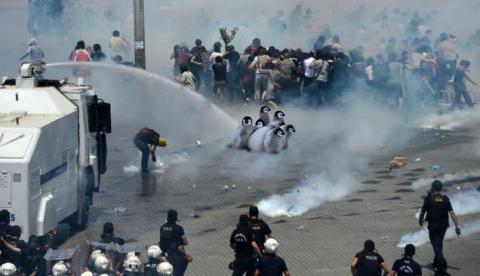
Green party politician Malte Spitz sued to have German telecoms giant Deutsche Telekom hand over six months of his phone data that he then made available to ZEIT ONLINE. We combined this geolocation data with information relating to his life as a politician, such as Twitter feeds, blog entries and websites, all of which is all freely available on the internet.
By pushing the play button, you will set off on a trip through Malte Spitz’s life. read more
MONTAGE: [unattributed]
Strictly extrapolative works of science fiction generally arrive about where the Club of Rome arrives: somewhere between the gradual extinction of human liberty and the total extinction of terrestrial life
June 11, 2013 § Leave a comment

Kerry Segrave, in “Shoplifting: A Social History”—a study frequently cited by Shteir, and which provides a more coherent and statistically richer overview subject than her own often scattered account—quotes Dr. David Reuben, writing in McCall ’s in 1970, to the effect that most amateur store thieves were married women between the ages of thirty-five and fifty-five. What they had in common, he said, was:
unhappy marriages, obesity, depression. Their sexual relationships with their husbands range from unsatisfactory to nonexistent. In effect, their lives have been drained of all emotional satisfaction… An afternoon roaming through a department store is a substitute for social relationships with other human beings.
In 1878, the Times quoted the superintendent of a department store saying, “Stealing seems to come natural to a great many women.”
These two views of women as thieves could be combined, with the assistance of time-honed free-floating misogyny, into a persistent faux-organic explanation for what was taken to be a quintessentially female crime. When Ella Castle, a wealthy American, was arrested in London on shoplifting charges, in 1896, she was examined by various physicians, with a view to a plea of kleptomania. She was released on their assessment of her condition. A Dr. Grigg testified:
She is intensely neurotic. The condition of things—a disease of the upper portion of the uterus—is a very common accompaniment of various forms of mania in women, such as melancholia, religious mania, nymphomania, and I have seen it in several cases of kleptomania. It is invariably coupled with much mental disturbance. The condition I discovered is quite sufficient to account for any form of mental vagaries which are as well known to affect a certain class of women (neurotic) with disordered menstruation.
When she got home, doctors at the Philadelphia Polyclinic agreed with the diagnosis.
The ancient belief that the womb wandered about the body causing mental distraction (thus “hysteria”) has transformed here into a mysterious “upper portion of the womb” disease. The main thing is that the wayward and inherently diseased female reproductive system is at the root of irrational and pathological behavior, which is only to be expected from women. Unstable female innards not only determine dangerous sexuality but also threaten to disrupt properly regulated commerce…
I come from the generation for whom, in the early nineteen-seventies, shoplifting became a positive virtue within the disaffected counterculture. Abbie Hoffman’s “Steal This Book” contained handy shoplifting hints and was chained down in bookstores. Jerry Rubin, channelling Proudhon’s dictum “Property is theft,” declared in his book “Do It,” “All money represents theft… Shoplifting gets you high. Don’t buy. Steal. If you act like it’s yours no one will ask you to pay for it.” I found this to be true. Running an alternative school with almost no money in the early seventies, I made trips to a large bookstore in London, and piled up reference books and textbooks until the tower nestled under my raised chin. Then I confidently walked out of the shop. Several times. No one ever stopped me. I had no qualms. read more
PHOTOGRAPH: Sasha Mademuaselle
Sand integument. Grains blown into navel. Stone-studded between toes
June 10, 2013 § Leave a comment
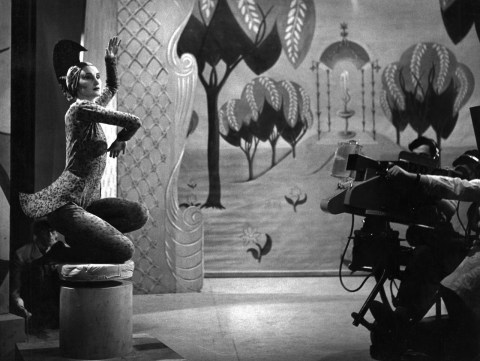
This design maintains the mutual elements of the UK banking system – our common cash machine system and payments infrastructure as well as the ‘free banking’ transaction system, it frees the lenders from a crippling cost obligation and it ensures that everybody can rely on ‘cash in the bank’ being there – regardless of the turmoil in the lending institutions.
The one casualty is interest on deposits. To have interest on deposits in a private system there has to be income from somewhere else to pay that interest. Therefore in this system it becomes a line item of government spending – likely via interest bearing accounts for individuals at National Savings. Paying interest on deposits in this way is then really just the same as paying coupons on Gilts. Gilts, of course, would cease to be issued under any rational government. read more
PHOTOGRAPH: [unattributed]
In the land of the blind the one-eyed man gets his good eye poked out
June 7, 2013 § Leave a comment

On Twitter, a friend asked “Twenty years from now, how many Chinese words will be common parlance in English?” I replied that we’ve already had 35 years since Deng Xiaoping began opening China’s economy, resulting in its stratospheric rise—but almost no recent Chinese borrowings in English.
Many purported experts are willing to explain China to curious (and anxious) westerners. And yet I can’t think of even one Chinese word or phrase that has become “common parlance in English” recently. The only word that comes close might be guanxi, the personal connections and relationships critical to getting things done in China. Plenty of articles can be found discussing the importance of guanxi, but the word isn’t “common in English” by any stretch.
Most Chinese words now part of English show, in their spelling and meaning, to have been borrowed a long time ago, often from non-Mandarin Chinese varieties like Cantonese. Kowtow, gung ho and to shanghai are now impeccably English words we use with no reference to China itself. Kung fu, tai chi, feng shui and the like are Chinese concepts and practices westerners are aware of. And of course bok choy, chow mein and others are merely Chinese foods that westerners eat; I would say we borrowed the foods, and their Chinese names merely hitched a ride into English.
Given China’s rocket-ride to prominence, why so little borrowing? read more
PHOTOGRAPH: Mariya Kozhanova
Alice who? Her name is Renee. If she told you her name was Alice she’s lying. And your name? What the fuck is your name?
June 6, 2013 § Leave a comment
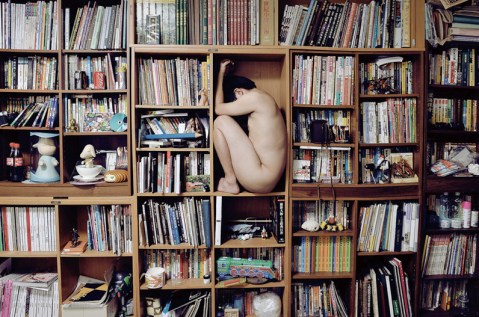
I have the same complaint: Mezzoforte was gesture… gesturized if they did this-this-this. I wanted it. I saw it very abstract. It didn’t happen that way… I had an idea. Actually the idea was suggested by the cellist. Well, he would say to the fellows, “Why don’t we just vibrate the first note and then do the other?” So just the whole idea of the vibrating gave it to him. So I spoke to my friend this morning on the phone and I said, “I think you should find a way to notate that vibrating and then not vibrating.” I said, “It might look as an affectation to other people,” I said, “but find a way to write it down. I think that’s exactly what you want, because I’m gonna change my score. It’s the only thing I’m gonna change in my score. The how to notate this, and I’m gonna use it now until the last days of my life.” I like that, and that was the problem. It wasn’t some kind of idea I had of mezzoforte-piano. It was a performance problem that I wasn’t in tune with. So Boulez, myself, whoever – Morton Subotnik – so much of our musical background and thinking came from various backgrounds and attitudes about performing. OK.
Which we’re getting in a convoluted way… But if this lecture was six hours my remarks would not be considered convoluted, but say, truths like Proust. Yeah, like Proust goes and talks a little bit. And that’s in a sense what happened to my String Quartet. I never have a plan in my idea, on my mind. I don’t like commissioned pieces. I don’t like to even know – never mind do I wanna call things something – I don’t want to even know that I’m writing for something. I kid myself I’m writing for something. And so for the past thirty years, even though I’m writing a piano piece, I start the same goddamn way, the same
goddamn way. I start on the same paper. And when you look through – any future historians of my music – it’s gonna be, every page written since 1958 looks exactly the same. read more
PHOTOGRAPH: Wang Chien-Yang
places that Musset, Byron, D’Annunzio and Henri de Regnier had the decency never to visit
June 5, 2013 § Leave a comment
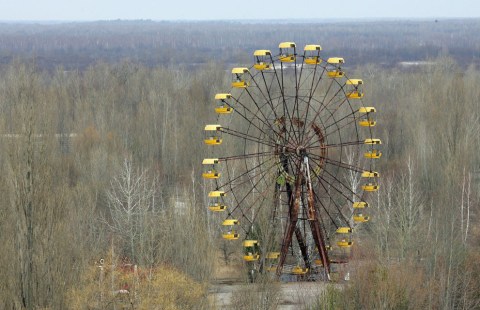
Flipping through the imposing art book that accompanies the Metropolitan Museum of Art Costume Institute’s spring exhibition, which explores punk rock’s influence on fashion, is like hearing your favorite Screamers song played in a mall. First, you feel bad—it’s more proof that everything gets sold out. Then you suspect that it’s some kind of dada trick. How else to explain sentences like this: “In punk’s spirit of revolution, Moda Operandi is the first online luxury retailer to offer unprecedented access to runway collections from the world’s top designers.” In punk’s spirit of revolution, my first instinct was to set the book on fire.
But arson isn’t the most fun you can have with the fashion world’s latest depredation of counterculture. Curator Andrew Bolton captured the spirit of the show in a video interview: “Even though [Chanel’s Karl Lagerfeld] is playing with the idea of the aesthetic of poverty,” he says, fingering a Chanel jacket riddled with carefully hemmed holes, “it’s still very much about luxury.” Deterioration has never looked so good. He says that punk’s defining trait, DIY, “is almost beyond couture,” because when you customize your leather jacket, it’s one of a kind. With this plaudit, Bolton neatly dissolves DIY’s political aim of anticorporate self-reliance and reframes it as high fashion’s favorite titillation: rarity. read more
PHOTOGRAPH: Gleb Garanich
This ganglion cluster should have been born with better eyes
June 4, 2013 § 1 Comment

In J.G. Ballard’s The Atrocity Exhibition (1970), a collection of experimental fictions, the central character, Travis, assembles a group of images described by Ballard in the text as “terminal documents.” This is a speculative visual interpretation of that list of images. read more
PHOTOGRAPH: Hendrik Kerstens
I’d rather dance with the cows till you come home
June 3, 2013 § Leave a comment
You know how it is, right, ladies? You know a guy for a while. You hang out with him. You do fun things with him—play video games, watch movies, go hiking, go to concerts. You invite him to your parties. You listen to his problems. You do all this because you think he wants to be your friend.
But then, then comes the fateful moment where you find out that all this time, he’s only seen you as a potential girlfriend. And then if you turn him down, he may never speak to you again. This has happened to me time after time: I hit it off with a guy, and, for all that I’ve been burned in the past, I start to think that this one might actually care about me as a person. And then he asks me on a date.
I tell him how much I enjoy his company, how much I value his friendship. I tell him that I really want to be his friend and to continue hanging out with him and talking about our favorite books or exploring new restaurants or making fun of avant-garde theatre productions. But he rejects me. He doesn’t answer my calls or e-mails; if we’d been making plans to do something before this fateful incident, these plans mysteriously fail to materialize. (This is why I never did get around to seeing the Hunger Games movie. Not to name any names, but thanks a lot, Tom.) Later, when I run into him at social events, our conversations are awkward and lukewarm. This is because the moment we met, he put me in the girlfriend-zone, and now he can’t see me as friend material.
I must say that I find this really unfair. I mean, I’m a nice girl. I have a lot to offer as a friend, like not being a douchebag and stuff. But males just don’t want to be friends with nice girls like me. They can’t help it, I guess; it’s just how they’re wired, biologically. Evolution conditioned our male hominid ancestors to seek nice girls as mates and form friendship bonds only with the other dudes that they hunted mammoths with. It’s true—I know this because I studied hominids in my fifth-grade science class. read more
ART: Franz Kline
 my nerves are bad to-night