relentless.com still goes there
February 11, 2014 § Leave a comment

A couple of weeks ago, we published a post that featured Galileo’s Moon drawings, “the first realistic depictions of the moon in history.” As it turns out—some readers alerted us—some of the Moon illustrations attributed to Galileo are actually very convincing forgeries, so convincing, in fact that when the drawings surfaced in 2005, they initially swayed such experts as rare books dealer Richard Lan, Harvard professor of astronomy and history of science Owen Gingerich, and art historian Horst Bredekamp. All of these experts have since come to learn—partially through the investigations of Georgia State University historian Nick Wilding—that an unusual edition containing detailed watercolors, purportedly in Galileo’s own hand (above and below), was in fact created by forger, book thief, and former director of the State Library of Girolamini, Marino Massimo De Caro, who now stands accused of stealing thousands of volumes, including centuries-old editions of Aristotle, Descartes, Galileo and Machiavelli. read more
STILL: [unattributed]
Before ten years are over, the Devil’s in it if I have not sucked out some of the life-blood from the mysteries of this universe, in a way that no purely mortal lips or brains could do
February 7, 2014 § Leave a comment

Consider, for instance, the experience of Boulet, a male cartoonist who, at one point, posted his work online under a female pseudonym and was stunned by the number of insulting, sexualised and misogynistic comments “she” received, having never experienced the like while posting art under his own name. More recently, a man who pretended to be a woman on OK Cupid – with the aim, ironically enough, of proving to a female friend that online dating was easy for women – quit after only two hours, shocked and disgusted by the deluge of gratuitous, aggressively sexual messages he received. And just last week, a male friend mentioned to me that, since he’s started playing a female character in an online game, he’s been getting hit on by other players – not grossly, but enough that he’s noticed the difference. That exchange prompted me to go on Twitter and ask if any other guys who’d had similar experiences would be willing to share them; what came back, however, was an even more interesting anecdote, wherein a female gamer noted that several men of her acquaintance have preferred to play as – and pretended to be – women in MMORPG environments specifically in order to scam male players.
Which opened up a rather breathtaking possibility: what if the respective myths of the Fake Geek Girl and Fake Gamer Girl are actively being perpetuated, not through the whore-user predations of evil ladies, but because a cynical, sexist subset of male geeks are using stereotypical, strawman portrayals of women to manipulate their peers? If this is what’s happening even some of the time, then not only might it account for the massive dissonance between female experiences in male-dominated gaming spaces (as documented by sites like Fat, Ugly or Slutty and Not In The Kitchen Anymore) and male accounts of the same exchanges, but for the ongoing pervasiveness of the stereotype. Wouldn’t it be wonderful, I mused, to have some data on that!
So I went and did some research. And guess what? There is data. read more
PHOTOGRAPH: Taj Bourgeois
Whosoever annoynts his feete or hands, with the grease of a Woolfe: he shall not be hurt with any colde of his handes, or feete so annointed
February 5, 2014 § Leave a comment
After genome sizes failed to fit notions of simplicity and complexity, researchers hypothesized that gene number—genes being the sections of the genome that encode proteins—might instead reflect them. For a few years, that seemed about right. Humans have about 22,000 genes while the mosquito Anopheles gambiae has about 14,000. Then, in 2007, an international team of researchers sequenced the genome of the plant-like sea anemones, marine creatures that lack muscles, heads, rear-ends, and brains. To their surprise, anemones had more genes than insects, including some genes that humans possess but flies do not. Even more perplexing: Sea anemones evolved before flies and humans, some 560 million years ago. That meant animals might have been genetically complex from the start. “When I was younger, and we knew less, we thought that organisms gained genes over millions of years and that the earliest animals were genetically very simple,” says Bill Pearson, a computational biologist at the University of Virginia who developed some of the first techniques to compare protein sequences among organisms. “We think that less now,” he adds…
It’s mutations that cause body parts to become simpler or more complex, so to see whether they naturally cause one state more often than the other, Jukka Jernvall, an evolutionary biologist at the University of Helsinki in Finland, experimented with teeth. According to the fossil record, mammals’ teeth went from tiny, pointy daggers 200 million years ago to more complex shapes with bumps and grooves. “For the first half of [mammals’] existence, teeth were pretty simple,” Jernvall says. “Then they went wild.”
Jernvall’s team induced mutations in genes involved in tooth formation in mice, and found that most of the mutations caused teeth to become simpler than they usually are. To form a more complex tooth, the team had to induce multiple molecular changes at once. The results suggest that reductions in complexity should evolve more easily than increases in complexity. Without pressure from the environment, teeth would have stayed simple. The fact that they did not means mammals with complex teeth were at a sizable advantage. Jernvall speculates that these mammals feasted on flowering plants that their pointy-toothed sisters could not grind. “Tooth complexity was ecologically driven through diet,” he says.
Jernvall’s study shows how complexity in tooth shape can evolve, but it does not speak to other trends in mammalian features, such as their number of vertebrae, changes in intelligence, or their number of genes. The sheer number of features for any given organism makes complexity an ineffable trait to grasp, says Dan McShea, an evolutionary biologist at Duke University in Durham, N.C. Shell designs and tooth bumps aren’t inherently perfect reflections of complexity, they’re just amenable to study. Furthermore, he says, people often choose to define complexity by what puts humans on top. If complexity were instead defined by features that allow an organism to survive successfully, he says cyanobacteria might be at the pinnacle level, because they have flourished for 3.5 billion years while many lineages of mammals have gone extinct within a fraction of that time. McShea warns, “This impression of directionality may be an illusion.”
Perhaps the fact that people are stunned whenever organisms become simpler says more about how the human mind organizes the world than about evolutionary processes. People are more comfortable envisioning increasing complexity through time instead of reversals or stasis. read more
PHOTOGRAPH: #garbagepix
Why do you need to identify with it? Can there be nothing out there but you?
February 3, 2014 § Leave a comment

The main aim of the Henslowe-Alleyn Digitisation Project is to provide the best possible images of every page of the manuscripts relating to theatrical affairs in the Henslowe-Alleyn Papers at Dulwich College. read more
PHOTOGRAPH: Michaela Meadow
Many readers had complimented me on the accuracy with which my book had ‘caught the period’, to which I was too grateful and too polite to respond by asking them how they could possibly know
January 31, 2014 § Leave a comment

He had been at work on a house when the earthquake struck. He clung to the ground for as long as it lasted; even his lorry shook as if it was about to topple over. The drive home, along roads without traffic lights, was alarming, but the physical damage was remarkably slight: a few telegraph poles lolling at an angle, toppled garden walls. As the owner of a small building firm, no one was better equipped to deal with the practical inconveniences inflicted by an earthquake. Ono spent the next few days busying himself with camping stoves, generators and jerry cans, and paying little attention to the news.
But once television was restored it was impossible to be unaware of what had happened. Ono watched the endlessly replayed image of the explosive plume above the nuclear reactor, and the mobile phone films of the black wave crunching up ports, houses, shopping centres, cars and human figures. These were places he had known all his life, fishing towns and beaches just over the hills, an hour’s drive away. And watching their destruction produced in Ono a feeling common at that time, even among those most directly affected by displacement and bereavement. Although what had happened was undeniable – the destruction of entire towns and villages, the extinction of a multitude – it was also impossible. Impossible and, in fact, absurd. Insupportable, soul-crushing, unfathomable – but also just silly.
‘My life had returned to normal,’ he told me. ‘I had petrol, I had an electricity generator, no one I knew was dead or hurt. I hadn’t seen the tsunami myself, not with my own eyes. So I felt as if I was in a kind of dream.’
Ten days after the disaster, Ono, his wife and his widowed mother drove over the mountains to see for themselves. They left in the morning in good spirits, stopped on the way to go shopping, and reached the coast in time for lunch. For most of the journey, the scene was familiar: brown rice fields, villages of wood and tile, bridges over wide slow rivers. Once they had climbed into the hills, they passed more and more emergency vehicles, not only those of the police and fire services, but military trucks of the Japan Self-Defence Forces. As the road descended towards the coast, their jaunty mood began to evaporate. Suddenly, before they understood where they were, they had entered the tsunami zone.
There was no advance warning, no marginal area of incremental damage. The wave had come in with full force, spent itself and stopped at a point as clearly defined as the reach of a high tide. Above it, nothing had been touched; below it, everything was changed.
No still photograph was capable of describing it. Even television images failed to encompass the panoramic quality of the disaster, the sense within the plain of destruction, of being surrounded by it on all sides. In describing the landscapes of war, we often speak of ‘total’ devastation. But even the most intense aerial bombing leaves walls and foundations of burned-out buildings, as well as parks and woods, roads and tracks, fields and cemeteries. The tsunami spared nothing, and achieved feats of surreal juxtaposition that no mere explosion could match. It plucked forests up by their roots and scattered them miles inland. It peeled the macadam off the roads and cast it hither and thither in buckled ribbons. It stripped houses to their foundations, and lifted cars, lorries, ships and corpses onto the tops of tall buildings.
At this point in Ono’s narrative, he became reluctant to describe in detail what he did or where he went. ‘I saw the rubble, I saw the sea,’ he said. ‘I saw buildings damaged by the tsunami. It wasn’t just the things themselves, but the atmosphere. It was a place I used to go so often. It was such a shock to see it. And all the police and soldiers there. It’s difficult to describe. It felt dangerous. My first feeling was that this is terrible. My next thought was: “Is it real?”’
Ono, his wife and his mother sat down for dinner as usual that evening. He remembered that he drank two small cans of beer with the meal. Afterwards, and for no obvious reason, he began calling friends on his mobile phone. ‘I’d just ring and say, “Hi, how are you?” – that kind of thing,’ he told me. ‘It wasn’t that I had much to say. I don’t know why, but I was starting to feel very lonely.’
His wife had already left the house when he woke the next morning. Ono had no particular work of his own, and passed an idle day at home. His mother bustled in and out, but she seemed mysteriously upset, even angry. When his wife got back from her office, she was similarly tense. ‘Is something wrong?’ Ono asked.
‘I’m divorcing you!’ she replied.
‘Divorce? But why? Why?’
And so his wife and mother described the events of the night before, after the round of needy phone calls. How he had jumped down on all fours and begun licking the tatami mats and futon, and squirmed on them like a beast. How at first they had nervously laughed at his tomfoolery, but then been silenced when he began snarling: ‘You must die. You must die. Everyone must die. Everything must die and be lost.’ In front of the house was an unsown field, and Ono had run out into it and rolled over and over in the mud, as if he was being tumbled by a wave, shouting: ‘There, over there! They’re all over there – look!’ Then he had stood up and walked out into the field, calling, ‘I’m coming to you. I’m coming over to that side,’ before his wife physically wrestled him back into the house. The writhing and bellowing went on all night until, around five in the morning, Ono cried out, ‘There’s something on top of me,’ collapsed, and fell asleep.
‘My wife and my mother were so anxious and upset,’ he said. ‘Of course I told them how sorry I was. But I had no memory of what I did or why.’
It went on for three nights. The next evening, as darkness fell, he saw figures walking past the house: parents and children, a group of young friends, a grandfather and a child. ‘They were covered in mud,’ he said. ‘They were no more than twenty feet away, and they stared at me, but I wasn’t afraid. I just thought, “Why are they in those muddy things? Why don’t they change their clothes? Perhaps their washing machine’s broken.” They were like people I might have known once, or seen before somewhere. The scene was flickering, like a film. But I felt perfectly normal, and I thought that they were just ordinary people.’
The next day, Ono was lethargic and inert. At night, he would lie down, sleep heavily for ten minutes, then wake up as lively and refreshed as if eight hours had passed. He staggered when he walked, glared at his wife and mother and even waved a knife. ‘Drop dead!’ he would snarl. ‘Everyone else is dead, so die!’
After three days of pleading by his family, he went to Reverend Kaneda at the temple. ‘His eyes were dull,’ Kaneda said. ‘Like a person with depression after taking their medication. I knew at a glance that something was wrong.’ Ono recounted the visit to the coast, and his wife and mother described his behaviour in the days since. ‘The Reverend was looking hard at me as I spoke,’ Ono said, ‘and in part of my mind I was saying, “Don’t look at me like that, you bastard. I hate your guts! Why are you looking at me?”’
Kaneda took Ono by the hand and led him into the main hall of the temple. ‘He told me to sit down. I was not myself. I still remember that strong feeling of resistance. But part of me was also relieved – I wanted to be helped, and to believe in the priest. The part of me that was still me wanted to be saved.’
Kaneda beat the temple drum as he chanted the Heart Sutra:
There are no yes, no ears, no nose, no tongue,
no body, mind; no colour, sound, or smell;
no taste, no touch, no thing; no realm of sight,
no realm of thoughts; no ignorance, no end
to ignorance; no old age and no death;
no end to age and death; no suffering,
nor any cause of suffering, nor end
to suffering, no path, no wisdom and no fulfilment.
Ono’s ife told him that he pressed his hands together in prayer and that as the priest’s recitation continued, they rose high above his head as if being pulled from above. The priest splashed him with holy water, and then suddenly he returned to his senses and found himself with wet hair and shirt, filled with a sensation of tranquillity and release. ‘My head was light,’ he said. ‘In a moment, the thing that had been there had gone. I felt fine physically, but my nose was blocked, as if I’d come down with a heavy cold.’
Kaneda spoke to him sternly; they both understood what had happened. ‘Ono told me that he’d walked along the beach in that devastated area, eating an ice cream,’ the priest said. ‘He even put up a sign in the car in the windscreen saying ‘disaster relief’, so that no one would stop him. He went there flippantly, without giving it any thought at all. I told him: “You fool. If you go to a place where many people have died, you must go with a feeling of respect. That’s common sense. You have suffered a kind of punishment for what you did. Something got hold of you, perhaps the dead who cannot accept yet that they are dead. They have been trying to express their regret and their resentment through you.”’ Kaneda smiled as he remembered it. ‘Mr Bean!’ he said. ‘He’s so innocent and open. That’s another reason they were able to possess him.’
Ono recognised all this, and more. It wasn’t just the spirits of men and women that had possessed him, he saw now, but also animals – cats and dogs and other beasts which had drowned with their masters.
He thanked the priest, and drove home. His nose was streaming as if with catarrh, but what came out was not mucus, but a bright pink jelly like nothing he had seen before. read more
PHOTOGRAPH: Andrei Tarkovsky
the drumming rain drops refuses a difference between speech and noise
January 29, 2014 § 1 Comment
“Do what you love. Love what you do.”
The commands are framed and perched in a living room that can only be described as “well-curated.” A picture of this room appeared first on a popular design blog, but has been pinned, tumbl’d, and liked thousands of times by now.
Lovingly lit and photographed, this room is styled to inspire Sehnsucht, roughly translatable from German as a pleasurable yearning for some utopian thing or place. Despite the fact that it introduces exhortations to labor into a space of leisure, the “do what you love” living room — where artful tchotchkes abound and work is not drudgery but love — is precisely the place all those pinners and likers long to be. The diptych arrangement suggests a secular version of a medieval house altar.
There’s little doubt that “do what you love” (DWYL) is now the unofficial work mantra for our time. The problem is that it leads not to salvation, but to the devaluation of actual work, including the very work it pretends to elevate — and more importantly, the dehumanization of the vast majority of laborers.
Superficially, DWYL is an uplifting piece of advice, urging us to ponder what it is we most enjoy doing and then turn that activity into a wage-generating enterprise. But why should our pleasure be for profit? Who is the audience for this dictum? Who is not?
By keeping us focused on ourselves and our individual happiness, DWYL distracts us from the working conditions of others while validating our own choices and relieving us from obligations to all who labor, whether or not they love it. It is the secret handshake of the privileged and a worldview that disguises its elitism as noble self-betterment. According to this way of thinking, labor is not something one does for compensation, but an act of self-love. If profit doesn’t happen to follow, it is because the worker’s passion and determination were insufficient. Its real achievement is making workers believe their labor serves the self and not the marketplace. read more
PHOTOGRAPH: [unattributed]
-Nobody likes it [Schoenberg, Boulez…] anyway. -Hey, I do! -Oh, then you’re faking it/you’re a snob/you’re nuts/you’re just a tiny elite while I belong to the real people/etc
January 27, 2014 § Leave a comment
Soccer is an English invention, but if you thought that the English male was the first person to put foot to an inflated ball, you are hundreds of years out of date. Chinese palace ladies were already practising their passing inside the bamboo fence. The ball was lined with an animal bladder and inflated from outside. What about the problem of bound-up feet? Foot-binding was widely imposed on classy women in the Ming period. These 15th-century footballers are moving freely, probably because the painting, as so often, is evoking a much earlier era. look
PHOTOGRAPH: Katrin Koenning
UK grows fast while wages and investment stagnate. So, what drives growth? The annihilation of savings & a another credit bubble. Great!
January 24, 2014 § Leave a comment
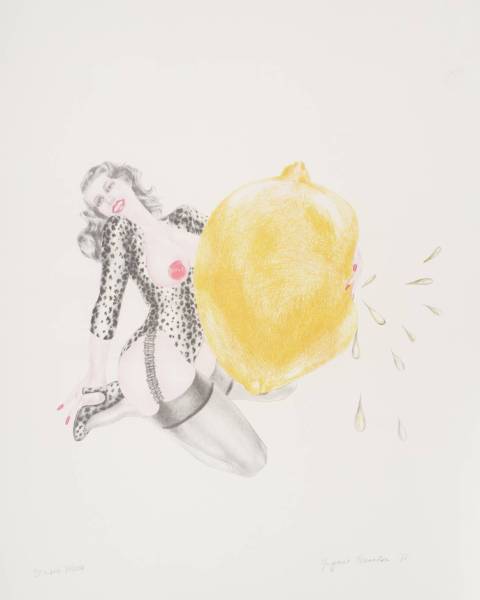
Do you know which words entered the English language around the same time you entered the world? Use our OED birthday word generator to find out. read more
ART: Margaret F Harrison
Here break we off our sundry languages
January 21, 2014 § Leave a comment

Brian Fung: The D.C. Circuit court has struck down net neutrality. What does that mean for consumers [citizens]?
Tim Wu: It leaves the Internet in completely uncharted territory. There’s never been a situation where providers can block whatever they want. For example, it means AT&T can block people from reaching T-Mobile’s customer service site if it wanted. They can do whatever they want.
Think of the, er, Intertubes as a water supply system, and the Verizon, AT&T, Comcast, Time-Warner (obscenely profitable) regional monopolies as utilities. Up until the Court’s ruling Tuesday, they own the pipes, and water’s water; you get charged the same price for water no matter where it comes from; it’s all equally treated. What these guys want to do is leverage their control over the pipes to sell you different kinds of water; “innovative” water from a branded faucet, if you will. Does that make sense? Thought not. As PC News puts it:
Imagine if we did the same with electricity. Rich neighborhoods and lucrative businesses pay more for electricity, so they get 24/7 juice. The rest of us? You have a second-tier service, so you can run electricity from 5-8 a.m. and then 7-11 p.m. Think that’s far-fetched? Ask anyone from Ukraine how their government distributes heat.
The problem here is that the FCC set itself up for failure — or, depending on your level of cynicism realism, for success — by the way it wrote its rules and argued its case. (David Pogue’s new) Yahoo Tech:
[T]he tough thing for Internet users is that the court’s opinion of the Federal Communications Commission’s rules isn’t wrong. The FCC’s rules were weak.
The 63-page ruling by judges David S. Tatel, Laurence H. Silberman and Judith W. Rogers for the United States Court of Appeals for the District of Columbia Circuit said that because the FCC declined to classify broadband providers the way you probably think of them — as “common carriers” that deliver information without interference, as the phone companies are considered — it can’t impose common-carrier-style regulations through other means:
The FCC itself queued up this collapse back in 2002, when it chose to classify cable Internet providers not as “telecommunications services” but as “information services,” then repeated the mistake in 2005 when it put phone-based broadband under the same category.
What’s the difference? The FCC says a telecommunications service “is used to deliver information without change in the form or content of the information,” while an “information service” consists of “applications that run over the ‘pipes’ of a communications network and depend on computers to generate, store, or process information.”
The Verge agrees:
[T]he FCC made what would turn out to be a pivotal mistake. Instead of stating the blindingly obvious — internet service is a utility just like landline phone service — the FCC tried to appease the out-of-control corporate egos of behemoths like Verizon and Comcast by pretending internet providers were special and classifying them as “information service providers” and not “telecommunications carriers.” The wrong words. Then, once everyone was wearing the nametag they wanted, the FCC tried to impose common carrier-style telecommunications regulations on them anyway.
The entire American internet experience is now at risk of turning into a walled garden of corporate control because the FCC chickened out and picked the wrong words in 2002, and the court called them on it twice over.
So, c’mon. Everybody knows that Verizon, AT&T, Comcast, Time-Warner aren’t “information services.” They’re not selling innovative water from a branded faucet; water’s water and they’re selling it from their pipes. Period. So treat them like common carriers or public utilities they are. read more
PHOTOGRAPH: Mike Goldby
Closed because of illness. I’ve gone to recuperate in the Dolomites. I will be better on Monday 18
January 20, 2014 § 1 Comment

In the late 1880s, Italian scientist Angelo Mosso built an intricate full-body balance and reported that mental activity tips the scales. Now, a modern-day version of Mosso’s “human circulation balance” backs him up…
Right after a two-second blip of either audio or audio and video, blood leaves the brain, as measured by a drop in force, Field and Inman found. This quick dip in blood volume, a phenomenon that’s also seen in functional MRI, may represent the brain preparing for work by shunting waste-ridden blood out via the jugular vein. Seconds after that, a surge of new blood enters the brain, increasing the force measured by the scale.
These changes in force were very small — about 0.005 newtons — and most prominent in the people who both listened to music and watched a video, Field says. It’s hard to calculate how much blood rushes into the brain with each mental task. To know that value, scientists would need to know the distance of the head from the lever’s fulcrum, which could be easily measured, and exactly where the blood came from, which is nearly impossible to know.
In his original experiments, Mosso found that tasks that required more mental energy made the brain heavier. Reading a page from a mathematics manual seemed to tip the balance more than reading a page from a newspaper. Strong emotions also tipped the scales: When a subject read a letter from an angry creditor, Mosso wrote, “the balance fell at once.” read more
PHOTOGRAPH: Mike Hollingshead
 my nerves are bad to-night