punk was indeed a sort of secret society, dedicated not to the guarding of a secret but to its pursuit
November 2, 2012 § Leave a comment

If the government undertakes public investment (e.g. builds schools, hospitals, and highways) or subsidizes mass consumption (by family allowances, reduction of indirect taxation, or subsidies to keep down the prices of necessities), and if, moreover, this expenditure is financed by borrowing and not by taxation (which could affect adversely private investment and consumption), the effective demand for goods and services may be increased up to a point where full employment is achieved. Such government expenditure increases employment, be it noted, not only directly but indirectly as well, since the higher incomes caused by it result in a secondary increase in demand for consumer and investment goods.
It may be asked where the public will get the money to lend to the government if they do not curtail their investment and consumption. To understand this process it is best, I think, to imagine for a moment that the government pays its suppliers in government securities. The suppliers will, in general, not retain these securities but put them into circulation while buying other goods and services, and so on, until finally these securities will reach persons or firms which retain them as interest-yielding assets. In any period of time the total increase in government securities in the possession (transitory or final) of persons and firms will be equal to the goods and services sold to the government. Thus what the economy lends to the government are goods and services whose production is ‘financed’ by government securities. In reality the government pays for the services, not in securities, but in cash, but it simultaneously issues securities and so drains the cash off; and this is equivalent to the imaginary process described above.
What happens, however, if the public is unwilling to absorb all the increase in government securities? It will offer them finally to banks to get cash (notes or deposits) in exchange. If the banks accept these offers, the rate of interest will be maintained. If not, the prices of securities will fall, which means a rise in the rate of interest, and this will encourage the public to hold more securities in relation to deposits. It follows that the rate of interest depends on banking policy, in particular on that of the central bank. If this policy aims at maintaining the rate of interest at a certain level, that may be easily achieved, however large the amount of government borrowing. Such was and is the position in the present war. In spite of astronomical budget deficits, the rate of interest has shown no rise since the beginning of 1940.
It may be objected that government expenditure financed by borrowing will cause inflation. To this it may be replied that the effective demand created by the government acts like any other increase in demand. If labour, plants, and foreign raw materials are in ample supply, the increase in demand is met by an increase in production. But if the point of full employment of resources is reached and effective demand continues to increase, prices will rise so as to equilibrate the demand for and the supply of goods and services. (In the state of over-employment of resources such as we witness at present in the war economy, an inflationary rise in prices has been avoided only to the extent to which effective demand for consumer goods has been curtailed by rationing and direct taxation.) It follows that if the government intervention aims at achieving full employment but stops short of increasing effective demand over the full employment mark, there is no need to be afraid of inflation. read more
ART: Wyndham Lewis
a Company for carrying on an Undertaking of Great Advantage, but Nobody to know what it is
November 1, 2012 § Leave a comment

Of all the operas written during Germany’s Weimar Republic (1919-33), probably the most haunting is the last.
Kurt Weill’s The Silver Lake, written with playwright Georg Kaiser, tells the story of two losers – a good-hearted provincial cop and the thief he has shot and wounded – as they make their way through a society ruined by unemployment, corruption and vice.
After spending a week again in Greece – amid riots, hunger and far right violence – I finally understood it.
The opera was meant to be Weill’s path back into the mainstream. It was his first break from collaborating with Bertolt Brecht, and was scheduled to open simultaneously in three German cities on 18 February 1933.
But on 30 January Adolf Hitler was appointed Germany’s chancellor.
The first performances of The Silver Lake were disrupted by Nazi activists in the audience and on 4 March 1933 it was banned. The score was torched, together with its set designs, in the infamous book-burning ceremony outside the opera house in Berlin.
It is easy to see why the Nazis didn’t like The Silver Lake. Weill was Jewish; the Nazi theatre critics found the music “ugly and sick”. Moreover the plot contains an allegory of the political situation on the eve of the Nazis’ rise to power.
But there has always been something else about The Silver Lake that goes beyond politics. Something hard to fathom.
Spending time in Greece, as the far right Golden Dawn party breaks up theatre performances with impunity, and street violence is common, I finally know what that something is. read more
ART: Wyndham Lewis
By a very peculiar irony, the public which demands “something new” is the very same as that which is bewildered and mocking each time someone tries to get them out of their comfortable habits and routines
October 31, 2012 § Leave a comment

One of the researchers talked about a retired man they interviewed, and one detail she mentioned was that this man explained that he has a precise procedure for buying something online: he would find exactly six options for what he wanted to buy, and write down their names, the price and where he found them in a notepad that he keeps near his computer before choosing one.
As the researcher mentioned this, an unsettled look passed briefly across her face, a clear reaction to the arbitrariness of this man’s ritual. Why the need for exactly six options? Why have a special notepad just for writing them down? Strange details like this emerge when you watch someone use a computer, which is perfectly ordinary and unremarkable except when you actually watch the precise hand movements on the mouse or trackpad, the way they reach for a key with the “wrong” finger, or perform some task using an unexpected sequence of clicks.
Two personal examples: I constantly click on, highlight and move my mouse over the paragraph I’m reading when I’m reading on a computer; and when I’m writing, I often start a sentence by rapidly and repeatedly writing and immediately deleting the first few words as I try different ways of wording what I’m trying to say. Both of these compulsive tics have been remarked upon as strange by people watching me typing and reading, and I wasn’t even fully aware that I do these things until they had been pointed out to me.
Everyone has their own distinctive, private ways of interacting with a computer that we may not even notice ourselves, but they strongly stand out as odd or even irritating to an observer. Experiences like this are captured in the rage comic The pain of watching non-geeks use a computer…, where the observer’s agony steadily escalates as he watches a “non-geek” inefficiently use Google, and brings this passage to my mind, which is from Žižek’s Plague of Fantasies and frequently reused in his other books:
when do I effectively encounter the Other “beyond the wall of language,” in the real of his or her being? Not when I am able to describe her, not even when I learn her values, dreams, etc., but, only when I encounter the Other in her moment of jouissance: when I discern in her a tiny detail – a compulsive gesture, an excessive facial expression, a tic – which signals the intensity of the real of jouissance. This encounter of the real is always traumatic, there is something at least minimally obscene about it. I cannot simply integrate it into my universe; there is always a gap separating me from it. read more
PHOTOGRAPH: Emily Rose
I asked him about the first and last sentences. They seem out of place in the larger context, I said, where crime and guilt don’t get mentioned
October 30, 2012 § Leave a comment

Many of the American-produced images that arguably fall under the category of “ruin porn” are artifacts of buildings, industries, and communities that have been casualties of modern American capitalism, and especially the process of deindustrialization that has occurred in many American urban centers, which has been devastating to minorities and the urban poor. Many of these images have come out of the shell of the American Rust Belt, leading to criticisms on the part of some that the images do not do justice to either the historical context or the present state of these spaces – as evidence of rampant social inequality and a failed welfare state – and that the photographs essentially construct the present of the spaces as more ruined and abandoned then they really are, given that many people may still live in or near them. In essence, they are accused of constructing a romantically gritty and melancholic vision of a past that allows viewers to avoid the more unpleasant understandings of a present or the even less pleasant prospect of a future marked by the scars of social inequality. read more
ART: Steve Kim
Many readers had complimented me on the accuracy with which my book had ‘caught the period’, to which I was too grateful and too polite to respond by asking how could they possibly know
October 29, 2012 § Leave a comment

… what I find so remarkable about Potter’s Carmen is that: if we’re thinking of red corpuscles, and at the same time the whole drama of the story, these are on two very different scales. She realises this in the way that she uses the video projections in the first Act. When you see the real Jose, he’s like a tiny little detail in a painting, and across the rest of the stage is a screen with these huge projections, which concern feelings which are as large as a continent. Potter plays with scale all the time. In the third act, with the incredible invention of the elevated glass bridge that spans the stage, which at a certain moment becomes as narrow as a horizon… all the time she is playing with scale: what’s small but near, huge but far away.
That quality of cinema is in a way the opposite of a theatrical spectacle, its quality of going very close to a body or a face, so that it becomes very intimate. At the same time because it is projected on that grey silk screen, it has something of the sky, of the measureless, about it, so that you have a strange juxtaposition of extreme close-up, such as can only occur in an intimate relation, and this galactic quality of the sky. And it seems to me that Potter’s production does exactly that: the smallness of a blood corpuscle and the vastness of the desires and longings and fears that the human body can experience, and it plays between those in all kinds of ways all the time – so it is the exact opposite of an elaborate wedding cake spectacle which old-fashioned opera could resemble. read more
ART [detail]: Zoe Beloff
Who you gonna believe, me or your own eyes?
October 26, 2012 § Leave a comment
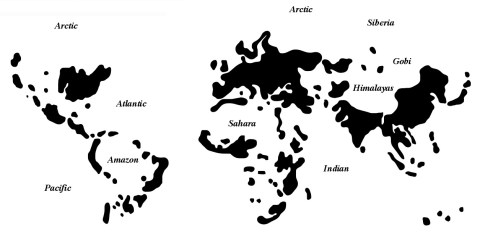
The 1979 Conservative manifesto barely mentioned privatisation, or denationalisation, as it was sometimes called. In 1968, when an internal party think-tank called the public sector of industry ‘a millstone round our necks’ and proposed some sell-offs, Thatcher was sceptical. ‘One could not have two rival enterprises,’ she said, ‘seeking to sell electricity in competition one with another.’ Littlechild disagreed. And in the ferment of the 1979 election victory theorists like himself saw a rare chance to test their ideas in a real, live, industrial society of fifty million people. In October 1981 he published a paper in the house journal of the radical free-market think-tank the Institute of Economic Affairs called ‘Ten Steps to Denationalisation’. Appearing alongside articles with such titles as ‘Why Recession Benefits Britain’ and ‘The Tumbril and the Classroom’, Littlechild’s proposals would have seemed to most politicians and business people of the time like the ravings of a revolutionary dreamer. As the mainstream right talked warily of selling off parts of the steel industry, Littlechild jumped ahead to what few others imagined could be the future: to the privatisation of the railways and the Post Office. ‘What the Post Office needs,’ he wrote, ‘is an imaginative asset stripper.’
His most extreme ideas, by the standards of the day, were about electricity. In Britain at that time electricity was produced and distributed by a state organisation with a no-nonsense Attlee-era moniker, redolent of brown paper envelopes and blotched stencils and corridors smelling of disinfectant: the Central Electricity Generating Board, the CEGB. Littlechild suggested splitting the National Grid off from the power-generating side of the CEGB, privatising regional electricity boards, letting private companies build power stations to compete with the state, and forcing the CEGB to sell or lease its coal and nuclear plants. It turned out these were not dreams, but prophecies packaged in an implementable plan; all were to come about within a decade. read more
MAP: after William Bunge
When people think they’ve seen enough of something, but there’s more, and no change of shot, then they react in a curiously livid way
October 25, 2012 § Leave a comment
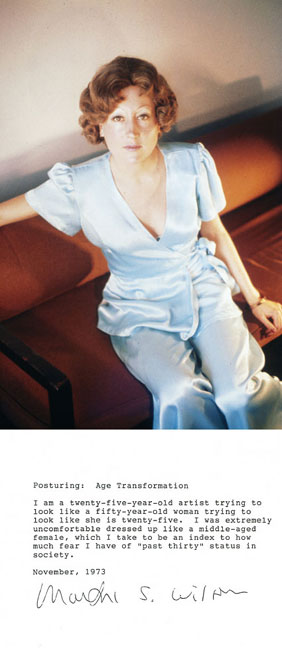
Half-way out, half-way home, somewhere on the roiling, oily-black waters of the Tsugaru Straits—where it matters not—current tugging the boat east into the Pacific, engine and propeller fighting back, we cross the invisible Blakiston Line, the silent marker of a biogeographic discontinuity much less familiar than the Wallace Line that seperates Southeast Asia and Australia, named after the Victorian gentleman of leisure and adventure Thomas Wright Blakiston (1832-1891), he of the largest and rarest Fish Owl, a man once described as having an acute “sensitization to the strange”, who first hypothesized—correctly, as it turns out—that the deep Tsugaru Straits, unlike the shallower La Pérouse Straits that separate Hokkaido and Sakhalin, never permitted a land-bridge to form between Hokkaido and Honshu during the last glacial maximum, which explains elegantly, among many other natural phenomena, why there are grizzlies on Hokkaido and black bears on Honshu and macaques on Honshu but not on Hokkaido. It’s this, the Blakiston Line, I come to appreciate after ten days of botanizing with Dr. T, as much as any human intervention, which renders Hokkaido and its birch-white forests so other-worldly to a visitor from the south. read more
ART: Martha Wilson
Now the midload was a middle flabe which was not too oversalt and a sugar flabe on her saliva glam and it wasn’t course quite satisfactual
October 24, 2012 § Leave a comment

… by making of the narrator not he who has seen and felt nor even he who is writing, but he who is going to write (the young man in the novel – but, in fact; how old is he and who is he? – wants to write but cannot; the novel ends when writing at last becomes possible), Proust gave modern writing its epic. By a radical reversal, instead of putting his life into his novel, as is so often maintained, he made of his very life a work for which his own book was the model…
the writer can only imitate a gesture that is always anterior, never original. His only power is to mix writings, to counter the ones with the others, in such a way as never to rest on any one of them. Did he wish to express himself, he ought at least to know that the inner ‘thing’ he thinks to ‘translate’ is itself only a ready-formed dictionary, its words only explainable through other words, and so on indefinitely read more
PHOTOGRAPH: Damien Roué
You have read me, I am sure. Am I black enough, think you, dressed up in a lasting suit of ink?
October 23, 2012 § Leave a comment

If Robinson in Space traffics with the aesthetics of the Sublime by encompassing heavy industrial sites, sweeping moorland, surging sea and the shock of economic restructuring, Robinson in Ruins, with its focus on fields, wildflowers, historic sites and the ache of decline traffics with the Picturesque. From a nearby car park Robinson surveys ‘the centre of the island on which he was shipwrecked: “the location”, he wrote, “of a Great Malady that I shall dispel in the manner of Turner by making picturesque views on journeys to sites of scientific and historic interest”’. The prospect evokes the series of elevated views of Oxford made famous by Turner. The distinctive skyline of college domes and towers in the distance is still as recognisable as it was in the nineteenth century, even though the fields in the foreground have been fully built over with houses and the middle distance screened with trees. Closer inspection, however, reveals that the city’s dreaming spires are now flanked by two massive cranes, one towering high over the city.
The documenting of current developments in an old, venerable landscape along with successive waves of change in the place’s history is indeed in the manner of Turner. It is particularly characteristic of Turner’s series Picturesque Views of England and Wales made between 1825 and 1838, which reformed the idea of picturesque landscape to document the dramatic changes of that period, including times of economic and political crisis. As with Turner’s picturesque views, the countryside is researched and envisaged in terms of wider and longer material and imaginative geographies, including its connection to urban, industrial and international interests.
The ‘great malady’ Robinson seeks to dispel in the manner of Turner recalls the words of another cultural wanderer, Charles Baudelaire. In his journal Baudelaire spoke of ‘the great malady, horror of one’s home’, a leitmotif of modernist mobility, particularly for exploratory English writers. The maxim is the epigraph of London where it denotes horror of ‘home-made’ English pathologies, including racism, militarism, bad food, sexual repression, hatred of intellectuals and indolence. Another pathology has been added by the time of Robinson in Ruins, neo-liberalism. read more
PHOTOGRAPH: Jillian Xenia
FILMMAKER: I’m going to tell you a story about a pianist. AUDIENCE: Oh, good: I wonder what happens to her! FILMMAKER: But first, before I do, I will take pains to reassure you that the actor you see portraying the hero can actually play the piano
October 22, 2012 § Leave a comment
Why do libraries hang on to stuff this old? Anyone who has read at least a handful of posts knows that I am usually a screaming banshee of librarian insanity when I run into old career materials. How can you serve an under-employed community when this is what you have to offer? Please, for the love of all that is library science, do not give me the speech “if we weed it, we won’t have anything.” I hate to tell you this, but you already have nothing except a big pile of firewood. read more
PHOTOGRAPH: larrylorca
 my nerves are bad to-night