Notions such as “free markets,” “economic efficiency,” and “perfect competition” are so devoid of any empirical reference that they belong to a discourse on metaphysics
March 22, 2013 § Leave a comment

Until my most recent visit for the 2011 Christmas holidays, it had never dawned on me that the language shift and the sexualization I had been observing were in any way connected. That changed when my mother and sister took me to the cinema to watch Eine ganz heisse Nummer, a German blockbuster that was released in October 2011 and that has attracted the kinds of viewer numbers usually reserved for Hollywood movies. The title translates as “A really hot number” and features the story of three women in a small Bavarian village who run the village grocery store. Facing bankruptcy because of competition from the supermarket chains in the nearby market town and cities and because of the overall economic crisis besetting the region, they decide to become phone sex providers to turn their fortunes around. read more
PHOTOGRAPH: Federico Chamei
I flew the Atlantic because I wanted to. If that be what they call ‘a woman’s reason,’ make the most of it
March 21, 2013 § Leave a comment

I learned today that Damiano Damiani passed away a few weeks back, aged 90, and thought it was worth pausing to mark the fact.
Damiani enjoyed a suitably epic career in Italian film and TV, working in some capacity in the industry from 1948 through to 2002, but to be honest most English-speaking film nerds probably remember him for one thing alone: 1966’s ‘Que Sabe?’ aka ‘A Bullet For The General’, an extraordinary piece of work that I think stands as one of the best post-1960 westerns made on either side of the Atlantic.
All of the Three Sergios went on to make movies with suspiciously similar plot-lines to Damiani’s film (Leone’s ‘Duck You Sucker’ / ‘A Fistful of Dynamite’, Corbucci’s ‘Companeros’, Sollima’s ‘Face To Face’), but, as immensely enjoyable as all those pictures are, for my money the sheer artistry and narrative intelligence of ‘Que Sabe?’ trumps them all. Without wishing to go overboard in my gushing, it is perhaps the best Spaghetti Western ever made, and it’s widely available on DVD too, so ferchrisake – if you like a good western, you know what to do. read more
PHOTOGRAPH: Natasha Gudermane
the wonkiest columnist in the driest newspaper in Britain is stating his case far more simply and clearly than the populist PR man turned prime minister
March 20, 2013 § Leave a comment

What factors caused the persecution of minorities in medieval and early modern Europe? We build a model that predicts that minority communities were more likely to be expropriated in the wake of negative income shocks. We then use panel data consisting of 785 city-level expulsions of Jews from 933 European cities between 1100 and 1800 to test the implications of the model. We use the variation in city-level temperature to test whether expulsions were associated with colder growing seasons. We find that a one standard deviation decrease in average growing season temperature in the fifteenth and sixteenth centuries was associated with a one to two percentage point increase in the likelihood that a Jewish community would be expelled. Drawing on our model and on additional historical evidence we argue that the rise of state capacity was one reason why this relationship between negative income shocks and expulsions weakened after 1600. read more
PHOTOGRAPH: Nate Walton
Here is a straight tube made with cardboard all of which surface is punched with shapes of stars & crescents. The one mouth is covered with red paper and another is blue. To explain what this tube is used for, this is as it is!
March 19, 2013 § Leave a comment

Episode one of Noise: A Human History, a thirty-part series made in collaboration with the British Library Sound Archive. listen
TYPESTRACT: Dom Sylvester Houédard
Forget your ying – and go fuck your yang
March 18, 2013 § Leave a comment

First, I want to refocus the definition of digital dualism to the moments where people downplay the role of the digital when speaking of something they think is material (wrongly called “real”) as well as downplaying the role of the material when speaking of something they think is primarily digital (wrongly called “virtual”). Regardless of your position on “reality”, this is digital dualism that underestimates the enmeshment of information and materiality, leading to ideas like Facebook comprises “virtual” rather than “real” friendships, that there is some “second self” that you inhabit online, and so on. Over the dinner table, in blog comments, in op-eds, in research papers, people often simply forget the material when talking about the digital and the digital in the material. Yes, people may almost never say the Internet is some distant other universe, but people do often overstate how distant and unrelated the material and the digital are. Those holding this digital dualist, zero-sum, conception of the on and offline are the ones surprised by research showing that those who do more online tend to also do more offline, opposed to the idea that people are trading “real life” in favor of living on Facebook.
Thus, digital dualism is the tendency to see the digital and material as too distinct, rather than enmeshed, consistent with the definition of the term I worked with one website to create:
n. The belief that online and offline are largely distinct and independent realities.
Second, I want to refocus on the question of how digital dualism—this tendency to underestimate digital-material enmeshment—often clears a clean path towards the claim that one (usually, but not always, the material) is more real, deep, human, and true. Not ontology, these are cultural value statements based on the idea that the on and offline are distinct rather than enmeshed.
My most passionate expression of this concern is my IRL Fetish essay where I argue that calling the digital “virtual” lets one simultaneously claim that which is not digital is “real.” It allows one to say that there is a crisis of the real, that it is disappearing in precisely the same moment that we are obsessed over it. read more
PHOTOGRAPH: Eric Helgas
In intellectual, political, or artistic circles, a cadre of men often monopolize the ability to participate in the production of events or ideas, which is not to say that they do anything particularly interesting
March 15, 2013 § Leave a comment
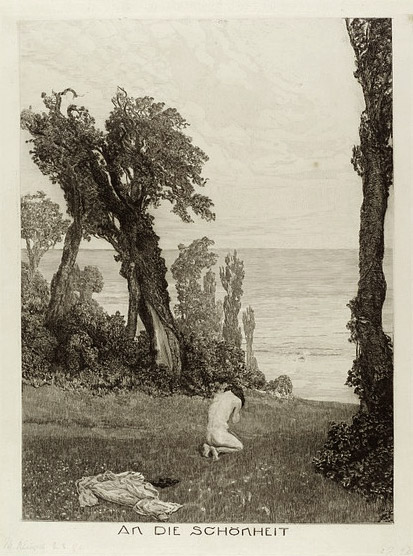
Primelocation outdo Unhappy Hipsters on their new advertising campaign of interiors without people. watch
ART: Max Klinger
We had pledged that, while researching this book, we would never reduce ourselves to driving round in a car, staring at people out of the window and making wild generalisations. But we were pushed for time
March 14, 2013 § Leave a comment

But what I really hate about TED talks is the curating of ideas that it represents. I realize that any gatekeeper will do this, but I’m particularly concerned about the TED byline, “Ideas Worth Spreading”. According to whom?
Who gets invited to those things? Whose ideas are interesting but non-threatening enough for the TED audience?
And how often do other, rawer ideas get ignored? How appealing do I have to make my idea to rich people in order to be an insider in this mini self-congratulatory universe?
Here’s an example of what I’m talking about written by a woman who was uninvited to give a TED talk under suspicious circumstances. Granted, it’s a TEDx situation, but it’s the same problem. The paragraph I worry about most:
Looking back, I must admit that upon learning of this invitation some of my colleagues and I questioned TEDx Manhattan’s commitment to serving as a platform for looking at our food system from a non-privileged perspective. Changing the Way We Eat is not a venue for the common person. The website makes no mention of available scholarships to enable low-income people or students to attend the pricey one day conference. Not only must attendees pay $135 for the privilege of sitting and listening, they also have to apply, explaining why they deserve to be part of the audience and then hope to be selected! read more
PHOTOGRAPH: Daniela Pineda
It is my design to render it manifest that no one point in its composition is referrible either to accident or intuition — that the work proceeded, step by step, to its completion with the precision and rigid consequence of a mathematical problem
March 13, 2013 § Leave a comment

Modern money is is state money. Taxation today functions to create demand for state currencies in order for the money-issuing authority to purchase requisite goods and services from the private sector. Taxation, in a sense, is a vehicle for moving resources from the private to the public domain. Government spending in sovereign currency systems is not limited by the ability of the state to ‘raise’ revenue. In fact, as it will be explained below, sovereign governments face no operational financial constraints.
To fully grasp the logic of sovereign financing, one must make the analytic distinction between the government and non-government sectors. For the private sector, spending is indeed restricted by its capacity to earn revenue or to borrow. This is not the case for the public sector, which ‘finances’ its expenditures in its own money. This is a reflection of its single supplier (monopoly) status. For example, in the USA, the dollar is not a ‘limited resource of the government’. Rather it is a tax credit to the population which is confronted with a dollar-denominated tax liability. Thus government spending provides to the population that which is necessary to pay taxes (dollars). The government need not collect taxes in order to spend; rather it is the private sector, which must earn dollars to settle its tax debt. The consolidated government (including the Treasury and the central bank) is never revenue constrained in its own currency.
If the purpose of taxation is to create demand for state money, then logically and operationally, tax collections cannot occur before the government has provided that which it demands for payment of taxes. In other words, spending comes first and taxation follows later. Another way of seeing this causality is to say that government spending ‘finances’ private sector ‘tax payments’ and not vice versa. Several other implications follow.
Deficits and surpluses
Government spending supplies high-powered money to the population. If the private sector wishes to hoard some of it – a normal condition of the system – deficits necessarily result as a matter of accounting logic. Furthermore, the government cannot collect more in taxes than it has previously spent; thus balanced budgets are the theoretical minimum that can be achieved. But the private sector’s desire to net save ensures that deficits are generated. The market demand for currency, therefore, determines the size of the deficit.
In a given year, of course, surpluses are possible, but they are always limited by the amount of deficit spending in previous years. If during the accounting period government spending falls short of tax collections, private sector holdings of net financial assets necessarily decline. The implication is that surpluses always reduce private sector net savings, while deficits replenish them. It should also be noted that, when governments run surpluses, they do not ‘get’ anything because tax collections ‘destroy’ high-powered money. read more
PHOTOGRAPH: Hans-Peter Feldmann
The future is already here – it’s just not very evenly distributed
March 12, 2013 § Leave a comment

Now pretend you don’t know a single person who wears Google Glass… and take a walk outside. Anywhere you go in public – any store, any sidewalk, any bus or subway – you’re liable to be recorded: audio and video. Fifty people on the bus might be Glassless, but if a single person wearing Glass gets on, you – and all 49 other passengers – could be recorded. Not just for a temporary throwaway video buffer, like a security camera, but recorded, stored permanently, and shared to the world.
Now, I know the response: “I’m recorded by security cameras all day, it doesn’t bother me, what’s the difference?” Hear me out – I’m not done. What makes Glass so unique is that it’s a Google project. And Google has the capacity to combine Glass with other technologies it owns.
First, take the video feeds from every Google Glass headset, worn by users worldwide. Regardless of whether video is only recorded temporarily, as in the first version of Glass, or always-on, as is certainly possible in future versions, the video all streams into Google’s own cloud of servers. Now add in facial recognition and the identity database that Google is building within Google Plus (with an emphasis on people’s accurate, real-world names): Google’s servers can process video files, at their leisure, to attempt identification on every person appearing in every video. And if Google Plus doesn’t sound like much, note that Mark Zuckerberg has already pledged that Facebook will develop apps for Glass.
Finally, consider the speech-to-text software that Google already employs, both in its servers and on the Glass devices themselves. Any audio in a video could, technically speaking, be converted to text, tagged to the individual who spoke it, and made fully searchable within Google’s search index.
Now our stage is set: not for what will happen, necessarily, but what I just want to point out could technically happen, by combining tools already available within Google.
Let’s return to the bus ride. It’s not a stretch to imagine that you could immediately be identified by that Google Glass user who gets on the bus and turns the camera toward you. Anything you say within earshot could be recorded, associated with the text, and tagged to your online identity. And stored in Google’s search index. Permanently.
I’m still not done… read more
WORDS: Bernadette Mayer
I’m only waiting for my cue, I’m a stranger here myself
March 11, 2013 § Leave a comment

After I received the photographs I looked at them for a long time. Here was, after all, visual proof of small parts of the life of a man I had never met, a man who was one of my grandfathers. I had not known my grandfathers (they had both died before I was born), so the concept – a father figure once removed – itself seemed strange to me. All these photographs, I figured, would surely tell me something about my grandfather, wouldn’t they? How can 25 photographs not say anything?
In various of the photographs, Josef Nowak is seen holding and/or playing an instrument, mostly an accordion. There are various group portraits, and there even is a photograph of an actual performance. My grandfather must have loved music. In many of the photographs, he strikes an almost comic figure, with his large round glasses, his slightly bewildered look in his eyes, and those ears that seem stick out just a tad too much. At times, my grandfather looked like the Zelig character in the eponymous movie, the person who somehow was everywhere, without actually belonging there. My grandfather, in other words, was the kind of person you wouldn’t really have to mark in a photograph. You’d notice that one guy sticking out anyway.
There is an exception to that rule. One photograph shows him in a field hospital, another group photograph. His right hand is bandaged, and the goofiness in his face seems gone. He also suddenly looks much younger, possibly because his uniform jacket is open, and his stance is more casual.
Every photographs tells a story, the old adage goes. It’s a wonderful cliché, it’s a horrible cliché, and it’s most certainly not true. What stories do these photographs of my grandfather tell me? Having looked at them for so long now (a few years) I’m still not an inch closer to knowing anything about the man. He loved music, I wrote. How would I know that? All I can really know from the photographs is that he knew how to competently hold an instrument and, possibly, play it. Everything else I added on top. read more
ART: Liu Xiaodong
 my nerves are bad to-night