Richmond Arithmetic versus Nottingham Marjorie: match postponed due to bent pitch
March 8, 2013 § 1 Comment

‘Alternative’ nude modelling site Suicide Girls gives calculated instructions on their website about the kinds of photos, make-up and aesthetic sets they accept: ‘tasteful’, ‘picture perfect’ shoots with ‘a little bit of face powder and mascara and freshly dyed hair’, but specifically not ‘cheap wig[s]’, ‘top hats’, ‘stripper shoes’, ‘food’ or things that look ‘cheesy’, ‘gross’ or ‘creepy’.
Similarly, the ‘girl next door’ look of the Australian all-female explicit adult site Abby Winters represents an alternative to glamour photography, featuring make-up-less, ‘amateur’ adult models – but models are still required to cover up hair re-growth, remove piercings, and not have any scratches, marks or mosquito bites for the shoot in order to appear ‘healthy’.
Other sites I’ve shot for speak about the importance of models representing their ‘own’ sexuality, but then go on to qualify: “We might get you to tone down the eye make up a bit”, “Maybe don’t talk about politics”, “Lesbians don’t really use double-enders do they?” One company asked me repeatedly to stop wearing frills.
In doing so, these sites produce bodies of a particular class, size and appropriate femininity, which are marketed as ‘real’, but which are equally constructed, conventionalised and cultivated. This fear of replicating ‘cheesy’, ‘predictable’ mainstream porn means that depictions of ‘real’ sexuality are often similarly clichéd, albeit with a different set of aesthetics.
In their avoidance of ‘the mainstream’ (whatever that means), ‘alternative’ porn (whether it brands itself queer, feminist or ‘erotica for women’) can sometimes replicate and reinforce what Gayle Rubin calls ‘Good, Normal, Natural, Blessed Sexuality’: the sex is vanilla, and involves only bodies (without objects or toys). Sex occurs in the home, between members of the same generation and only within couples. The scenes are soft, gentle, usually in ‘natural’ light and ‘every-day clothes’ (which in my experience means we are expected to bring Bonds underwear).
To think that this could be any more ‘real’ than mainstream porn seems strange to me, especially when it is produced in an environment that is completely staged: our movements are restricted by camera angles, someone is standing beside us operating the equipment, many of us are professionals pretending to be amateur, and in true ‘documentary’ style, we are expected to cum on cue. These kinds of websites are marketable and loveable because they refuse to define themselves as ‘porn’ – even though, as Annie Sprinkle said in the Herstory of Porn, the difference between erotica and porn “is all in the lighting!” read more
PHOTOGRAPH: Elene Usdin
Will work for less work
March 7, 2013 § Leave a comment

I realize “Banksy stole the quote!” is much more dramatic and satisfying than “Banksy made a poor stylistic choice in his book layout, causing confusion years later! He attempted to inform me but had the wrong address!” read more
PHOTOGRAPH: Nich Hance McElroy
You can prove anything with facts
March 6, 2013 § Leave a comment

The Staple of Newes is a city comedy that satirises the very idea of ‘news’ and the selling of news through broadsheets, gazettes, or curantes – themselves all rather ‘new’ phenomena. Running through the play, though, is a familiar Jonsonian trope taken to an extreme level; many of Jonson’s prefaces or epilogues give short shift to quarrelsome critics or unamused audiences, but Staple actually stages disapproval of the play, introducing an ‘intermean’ after every act in which allegorical characters dissect its content.
A few days before reading The Staple of Newes, I watched a DVD of Stewart Lee’s 2012 comedy tour, Carpet Remnant World. Perhaps surprisingly, there are similarities. Of course, it is difficult to compare with any seriousness Lee’s layered irony with Jonson’s 17th-century wit, but the intermean in The Staple of Newes offers a small but amusing point of comparison.
Lee’s Carpet Remnant World is structured by his repeated addresses to the audience, which he splits into two: those who are fans of his comedy and have seen him before – sitting in the centre, before the stage – and those who have been dragged along by their friends – sitting up in the Gods. Every joke is analysed, re-told, and explained for the benefit of the latter, these supposedly unamused and baffled guests…
The following intermeans serve, like Stewart Lee’s running address to the theatre, to deconstruct the play’s comedy through misinterpretation. The Gossips complain about the characters and even criticise the moral voice of the play, Pennyboy Canter; Tattle complains, ‘I cannot abide that nasty fellow, the beggar. If he had been a court-beggar in good clothes, a beggar in velvet, as they say, I could have endur’d him’ (Intermean I, 10-12). Such self-conscious irony is of course nothing new to the early modern theatre, but the extent to which Staple is structured upon it is quite surprising. Setting us up for the fact that the beggar is in fact the wealthy father of the play’s hero, the prodigal Pennyboy Junior, Jonson’s comedy structure typifies this self-referential aspect of early modern drama. The tropes, types, and plots of what Jonson might call ‘mouldy’ tales are all discussed, mocking the tastes of contemporary audiences. Tattle ‘would fain see the fool… the fool is the finest man i’the company, they say, and has all the wit…’. Yet, as Mirth informs her, ‘they ha’ no fool i’this play’ (ll20-26). Indeed, the gossips quarrel over the reputation of the playwright himself, remembering a performance of Jonson’s The Devil is an Ass and more favourably recalling the drunken smith in the popular anonymous play The Merry Devil of Edmonton: ‘Would we had such another part and such a man in this play. I fear ’twill be an excellent dull thing’ (ll.78-9). read more
PHOTOGRAPH: Katya Kanke
He who cannot find wonder, mystery, awe, the sense of a new world and an undiscovered realm in the places by the Gray’s Inn Road will never find those secrets elsewhere, not in the heart of Africa, not in the fabled hidden cities of Tibet. “The matter of our work is everywhere present”, wrote the old alchemists, and that is the truth. All the wonders lie within a stone’s throw of King’s Cross Station
March 5, 2013 § Leave a comment

When Gould was not playing piano (or organ) he was fashioning something else—interview shows, portraits of artists, and oddities such as his arch dialogue on the dire impact of competitive sports on the world. But the peaks of Gould’s non-piano involvement with the medium were three sound documentaries, instances of what Gould called “contrapuntal radio” that were retrospectively grouped together as “The Solitude Trilogy.” The first, “The Idea of North,” was about just that, the enduring mythological significance of the Canadian North in the postwar era when its national integration was proceeding rather quickly; it first aired Dec. 28, 1967. The second, “The Latecomers,” was about the forced depopulation of Newfoundland outports as the colony became part the Canadian confederation; it aired Nov. 12, 1969. And the last, “The Quiet in the Land,” dealt with Mennonite accommodations to contemporary mass culture. It was completed in 1975, but did not air until Mar. 25, 1977. These three pieces are, by all estimates save one, fascinating, technologically adept incursions into questions of nation, sound, space, and media. The one reserved judgment belongs to Darrel Mansell who called them “uninteresting.” He is more than balanced out by Richard Kostelanetz, who places Gould in the Text-Sound art pantheon—“a radio artist of the first rank, if not the greatest in North America.”
The standard interpretation of these pieces is biographical, and it runs more-or-less like this: After 1964, as Gould attempted to grapple with his own mediated career, he found in Canada’s national experience a collection of ready allegories. As his best biographer, Kevin Bazzana, puts it: “The train trip in The Idea of North stands in for the inward journey Gould had been taking since 1964. ‘It’s very much about me,’ he said of the program. ‘In terms of what it says, it’s about as close to an autobiographical statement as I am probably going to make at this stage of my life.’” What is more, Gould’s explorations of contemporary solitude were not only allegories of his own solitude and mediated public presence, they were original compositions, and as such they were compensation for his failure as a composer of music. Again, Bazzana: “Creating successful works in a new genre of radio art took much of the sting out of his failure as a composer.” As Kostelanetz puts it: “In 1967, Gould told me that he wanted to compose more difficult contemporary music, in the Schoenberg tradition… Whether he ever composed such music I do not know—nothing has turned up since his death in 1982. Rather, he produced these radio pieces that, let me suggest, represent the fruition of his compositional ambitions.” Radio as compensatory, allegorical autobiography.
Of course if one has put aside formal analysis, then the standard way to think about virtually all sorts of music has been through something like compensatory, allegorical autobiography. Still, Gould is an odd candidate for that convergence since his particular genius was for the strictures and systems of composers such as Bach and Schoenberg, what he would call a kind of “puzzle solving.” One can persist in regarding form a stalking horse for psychic torment, but whatever the source of Gould’s interest in form, he was, indeed, interested in form. For us, then, that translates into a need to explain allegoresis itself. More simply: why do Gould’s documentaries have a contrapuntal form? Needless to say, I don’t think that this is a biographical question but something like an aesthetic question, and to begin to answer it, I will turn to a shorter piece that is often left out of the Gould radio documentary canon, “The Search for Pet Clark,” a 23 minute essay that first aired Dec. 11, 1967, two and half weeks before The Idea of North. “Pet Clark” is a rehearsal of the great Gouldian themes—mobility, documentary, solitude, mediation—in a far more explicitly autobiographical vein. Those open commitments help us resist the temptation to see Gould’s radio career as a sustained yet unconscious effort to manifest his own unspoken self-involvements. Instead, we will catch Gould at a moment when his commitment to allegory will be raw.
“Pet Clark” is also technologically raw. Gould’s plunge into documentary making resulted in dramatic leaps forward in complexity; he built his later pieces at the very limits of what the CBC studio was then capable of. “Pet Clark,” in contrast, is utterly conventional. read more
ART: Georgio Morandi
The ticking can be heard like the sea if the enquirer presses an ear to the forged steel padlock that damply secures all access at the base of the tower
March 4, 2013 § 1 Comment
Criminologists know that accounting control fraud causes greater financial losses than all other forms of property crime – combined.
Some of the world’s best economists, George Akerlof and Paul Romer, praised the S&L regulators’ early recognition of these frauds and set out a formal economic theory of accounting control fraud (“Looting: the Economic Underworld of Bankruptcy for Profit”). They ended their 1993 article with this paragraph, in order to emphasize its importance.
“Neither the public nor economists foresaw that [S&L deregulation was] bound to produce looting. Nor, unaware of the concept, could they have known how serious it would be. Thus the regulators in the field who understood what was happening from the beginning found lukewarm support, at best, for their cause. Now we know better. If we learn from experience, history need not repeat itself.”
The primary reasons that accounting control fraud can produce catastrophic losses are the seeming legitimacy of the firm, the supreme status and respectability of the CEO leading the fraud, the fact that accounting control fraud is a “sure thing” (Akerlof & Romer 1993), the ability of control fraud to hyper-inflate bubbles, allowing the fraud to persist for years and magnify losses, and the paradox that the optimal means for a fraudulent CEO to loot “his” bank is to cause the bank to make exceptionally bad loans.
The last element is so counter-intuitive that despite the accounting control frauds’ dominant role in driving the S&L debacle and the Enron-era accounting control frauds many people cannot really believe that elite CEOs would loot “their” banks despite the many felony convictions of the elite CEOs that drove the two predecessor crises.
“Benjamin Wagner, a U.S. Attorney who is actively prosecuting mortgage fraud cases in Sacramento, Calif., points out that banks lose money when a loan turns out to be fraudulent. ‘It doesn’t make any sense to me that they would be deliberately defrauding themselves,’ Wagner said.”
Wagner is so befuddled that he cannot keep his pronouns straight in the same sentence. “They” is the fraudulent CEO. The fraudulent CEO loots “his” bank. The bank is “themselves” in Wagner’s bewildered sentence. The CEO is not looting himself when he loots the bank. read more
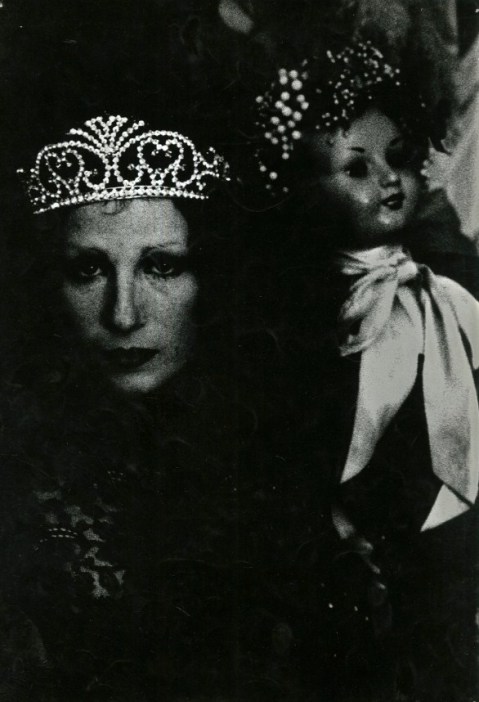
PHOTOGRAPH: Irina Ionesco
As I have told you about eight times
March 1, 2013 § Leave a comment

Penrose made the sensational claim that he had glimpsed a signal originating from before the Big Bang working with Vahe Gurzadyn of the Yerevan Physics Institute in Armenia. Penrose came to this conclusion after analyzing maps from the Wilkinson Anisotropy Probe.
These maps reveal the cosmic microwave background, believed to have been created just 300,000 years after the Big Bang and offering clues to the conditions at that time. Penrose’s finding runs directly counter to the widely accepted inflationary model of cosmology which states that the universe started from a point of infinite density known as the Big Bang about 13.7 billion years ago, expanded extremely rapidly for a fraction of a second and has continued to expand much more slowly ever since, during which time stars, planets and ultimately humans have emerged.
That expansion is now believed to be accelerating due to a scientific X factor called dark energy and is expected to result in a cold, uniform, featureless universe. Penrose, however, reports Physics World, takes issue with the inflationary picture “and in particular believes it cannot account for the very low entropy state in which the universe was believed to have been born – an extremely high degree of order that made complex matter possible. He does not believe that space and time came into existence at the moment of the Big Bang but that the Big Bang was in fact just one in a series of many, with each big bang marking the start of a new “aeon” in the history of the universe.”
The core concept in Penrose’s theory is the idea that in the very distant future the universe will in one sense become very similar to how it was at the Big Bang. Penrose says that “at these points the shape, or geometry, of the universe was and will be very smooth, in contrast to its current very jagged form. This continuity of shape, he maintains, will allow a transition from the end of the current aeon, when the universe will have expanded to become infinitely large, to the start of the next, when it once again becomes infinitesimally small and explodes outwards from the next big bang.
Crucially, he says, the entropy at this transition stage will be extremely low, because black holes, which destroy all information that they suck in, evaporate as the universe expands and in so doing remove entropy from the universe.”
The foundation for Penrose’s theory is found in the cosmic microwave background, the all-pervasive microwave radiation that was believed to have been created when the universe was just 300,000 years old and which tells us what conditions were like at that time. The evidence was obtained by Vahe Gurzadyan of the Yerevan Physics Institute in Armenia, who analysed seven years’ worth of microwave data from WMAP, as well as data from the BOOMERanG balloon experiment in Antarctica.
Penrose and Gurzadyan say they have clearly identified concentric circles within the data – regions in the microwave sky in which the range of the radiation’s temperature is markedly smaller than elsewhere. The Cosmic Microwave Background (CMB) radiation is the remnant heat from the Big Bang. This radiation pervades the universe and, if we could see in microwaves, it would appear as a nearly uniform glow across the entire sky.
However, when we measure this radiation very carefully we can discern extremely faint variations in the brightness from point to point across the sky, called “anisotropy”. These variations encode a great deal of information about the properties of our universe, such as its age and content. The “Wilkinson Microwave Anisotropy Probe” (WMAP) mission has measured these variations and found that the universe is 13.7 billion years old, and it consists of 4.6% atoms, 23% dark matter, and 72% dark energy.
According to Penrose and Gurzadyan, as described in arXiv: 1011.3706, these circles allow us to “see through” the Big Bang into the aeon that would have existed beforehand. They are the visible signature left in our aeon by the spherical ripples of gravitational waves that were generated when black holes collided in the previous aeon.
The “Penrose circles” pose a huge challenge to inflationary theory because this theory says that the distribution of temperature variations across the sky should be Gaussian, or random, rather than having discernable structures within it. read more
It is very difficult to make out why people who want dinner do not ring a bell
February 28, 2013 § 1 Comment

If Standard English is not therefore a language, an accent, a style or a register, then of course we are obliged to say what it actually is. The answer is, as at least most British sociolinguists are agreed, that Standard English is a dialect. As we saw above, Standard English is simply one variety of English among many. It is a sub-variety of English. Sub-varieties of languages are usually referred to as dialects, and languages are often described as consisting of dialects. As a named dialect, like Cockney, or Scouse, or Yorkshire, it is entirely normal that we should spell the name of the Standard English dialect with capital letters.
Standard English is however of course an unusual dialect in a number of ways. It is for example by far the most important dialect in the English-speaking world from a social, intellectual and cultural point of view; and it does not have an associated accent.
It is also of interest that dialects of English, as of other languages, are generally simultaneously both geographical and social dialects which combine to form both geographical and social dialect continua. How we divide these continua up is also most often linguistically arbitrary, although we do of course find it convenient normally to make such divisions and use names for dialects that we happen to want to talk about for a particular purpose as if they were discrete varieties. It is thus legitimate and usual to talk about Yorkshire dialect, or South Yorkshire dialect, or Sheffield dialect, or middle-class Sheffield dialect, depending on what our particular objectives are. Standard English is unusual, seen against this background, in a number of ways. First, the distinction between Standard English and other dialects is not arbitrary or a matter of slicing up a continuum at some point of our own choice, although as we have seen there are some difficulties. This is inherent in the nature of standardisation itself. There is really no continuum linking Standard English to other dialects because the codification that forms a crucial part of the standardisation process results in a situation where, in most cases, a feature is either standard or it is not.
Secondly, unlike other dialects, Standard English is a purely social dialect. Because of its unusual history and its extreme sociological importance, it is no longer a geographical dialect, even if we can tell that its origins were originally in the southeast of England. It is true that, in the English-speaking world as a whole, it comes in a number of different forms, so that we can talk, if we wish to for some particular purpose, of Scottish Standard English, or American Standard English, or English Standard English. (Bizarrely, the British National Curriculuim document suggests that American and Australian English are not Standard English!) And even in England we can note that there is a small amount of geographical variation at least in spoken Standard English, such as the different tendencies in different parts of the country to employ contractions such as He’s not as opposed to he hasn’t. But the most salient sociolinguistic characteristic of Standard English is that it is a social dialect.
At least two linguists have professed to find this statement controversial. Stein and Quirk (1995) argue that Standard English is not a social class dialect because the Sun, a British newspaper with a largely working-class readership, is written in Standard English. This argument would appear to be a total non-sequitur, since all newspapers that are written in English are written in Standard English, by middle-class journalist, regardless of their readership.
Stein and Quirk also fly in the face of all the sociolinguistic research on English grammar that has been carried out in the last quarter of the 20th century (see for example Cheshire, 1982). Standard English is a dialect which is spoken as their native variety, at least in Britain, by about 12%-15% of the population, and this small percentage does not just constitute a random cross-section of the population. They are very much concentrated at the top (or, as some would prefer, “the top”) of the social scale. The further down the social scale one goes, the more nonstandard forms one finds.
Historically, we can say that Standard English was selected (though of course, unlike many other languages, not by any overt or conscious decision) as the variety to become the standard variety precisely because it was the variety associated with the social group with the highest degree of power, wealth and prestige. Subsequent developments have reinforced its social character: the fact that it has been employed as the dialect of an education to which pupils, especially in earlier centuries, have had differential access depending on their social class background.
So far we have not discussed grammar. When, however, it comes to discussing what are the linguistic differences between Standard English and the nonstandard dialects, it is obvious from our discussion above that they cannot be phonological, and that they do not appear to be lexical either (though see below). It therefore follows that Standard English is a social dialect which is distinguished from other dialects of the language by its grammatical forms. read more
ART: igetboredatparties
Radio noise is observed by spacecraft in the plasmatrough (the cavity of low-density plasma between the Earth’s plasmasphere and the Earth’s magnetosheath)
February 27, 2013 § Leave a comment

If you have fewer than 10 service providers at your international frontier, your country is probably exposed to some significant risk of Internet disconnection. Ten providers also seems to be the threshold below which one finds significant additional risks from infrastructure sharing — there may be a single cable, or a single physical-layer provider who actually owns most of the infrastructure on which the various providers offer their services. In this category, we place 72 countries, including Oman, Benin, Botswana, Rwanda, Pakistan, Kyrgyzstan, Uganda, Armenia, and Iran. Disconnection wouldn’t be trivial, but it wouldn’t be all that difficult. Egypt falls into this category as well; it took the Mubarak government several days to hunt down and kill the last connections, but in the end, the blackout succeeded. read more
ART: Michelangelo
My turn. Put the contraption on me, use the pump to blow it up, and get out. If you do anything else, or if you come back, I’ll never forgive you
February 26, 2013 § 1 Comment

Most or many of his thirty or forty books (no one seems to know exactly how many there are) are out of print. Only his 1971 travelogue, The Inland Sea, and some of his film criticism, are read except by those with a specialist interest in Japan. ‘I wish I had an agent – I could just send it off to him or her,’ he writes in his journal in 1996, with another unpublished novel on his desk. ‘But I can’t. No agent has ever accepted me.’ A hundred pages, and seven years, later he is taking an ‘orphan manuscript’ of short stories to a vanity publisher. Both The Japan Journals and the earlier Donald Richie Reader (2001) transmit a resentment, on the part of the younger fans who have edited them, that he is not more famous and better regarded. In a self-defeating introduction to the Reader, Arturo Silva indignantly sets out the neglect suffered by his hero: ignored by ‘editors and bureaucrats’, unrecognised by the academic establishment, forced five times to rewrite a profile of Kurosawa for the New York Times magazine, only to have it spiked. ‘For all the work and decades spent on it, Richie’s view of Japan seems still to belong only to the “happy few”,’ he observes unhappily. ‘One difficulty of “placing” him is that Richie is neither an academic nor a popular writer . . . Indeed, Richie is doubly other: caught between two facing mirrors that no one bothers to look into.’ Wounded partisanship of this type leads one to suspect a straightforward explanation for his unsuccess: that Richie simply isn’t much of a writer. But is there more to it than this: a reflection of the times he has lived through; something inhospitable in the intellectual atmosphere of Tokyo itself?
No one has written with more concentration about the peculiar quality of exile enjoyed by the gaijin, the foreigner in Japan. Densely hierarchical, structured by invisible networks of deference, obligation and taboo, conventional Japanese society offers no formal place to the ‘outside person’. But this alienation is so absolute that it is experienced as something close to liberation, a stimulus to observation and analysis. ‘Japan has afforded him’ – the author – ‘a situation of writing,’ Roland Barthes wrote in Empire of Signs. This situation is ‘one in which a certain disturbance of the person occurs, a subversion of earlier readings, a shock of meaning lacerated, extenuated to the point of its irreplaceable void.’ Japan, to put it in drastically un-French terms, puts you on your mettle. It is an observation that Richie returns to again and again. ‘In Japan,’ he recorded in 1992, ‘I interpret, assess an action, infer a meaning.’
Every day, every hour, every minute. Life here means never taking life for granted, never not noticing. For me alone I wonder? I do not see how a foreigner can live here and construct that shroud of inattention, which in the land from whence he came is his natural right and his natural tomb . . . it is with this live connection that the alert foreigner here lives. The electric current is turned on during all the waking hours: he or she is always occupied in noticing, evaluating, discovering and concluding . . . It is the difference between just going to a movie and living it for a few hours, and going to the same film as a reviewer, taking notes, standing apart, criticising, knowing that I must make an accounting of it. The former is more comfortable; the latter is better.
This is indeed the excitement of life in Japan at its best, and it provides obvious opportunities for the writer. From a journal entry in 1998:
Smilingly excluded here in Japan, politely stigmatised, I can from my angle attempt only objectivity, since my subjective self will not fit the space I am allotted . . . how fortunate I am to occupy this niche with its lateral view. In America I would be denied this place. I would live on the flat surface of a plain. In Japan, from where I am sitting, the light falls just right – I can see the peaks and valleys, the crags and crevasses.
There is another lucky side effect for many expatriates: personal alienation, the inescapable sense of being different from everyone else, is cancelled out, or at least rendered invisible, by the larger, universal alienation of being a gaijin. This is the partial explanation for something else remarked on several times by Richie: as he shyly puts it, ‘the strange prevalence of people of like preferences among foreign Japanese specialists’. read more
PHOTOGRAPH: Lukas Wierzbowski
Society is like sex in that no one knows what perversions it can develop once aesthetic considerations are allowed to dictate its choices
February 25, 2013 § Leave a comment

M. John Harrison, the great British anti-fantasy writer has written brilliant screeds against world creation. He deliberately messes with the reader’s expectations of world creation. He likes to torture us with that nerdy desire we have for a stable secondary world—and I speak as one who shares it. So, for example, the name of the city he’s created in Viriconium changes from story to story with no particular explanation. The map shifts. A character who is dead in one story comes back later on. This of course makes continuity freaks scream in physical pain. I really love this about him. It’s incredibly provocative, and while it’s not the paradigm I write within, I do try to take some of the lessons from that.
What that would mean would be, for example, don’t fill in everything on a map. If you don’t know what’s on a map in the real world, how can you possibly fill one in in a world that doesn’t exist? It’s meaningless. Leave things unknown.
With The City & the City, one of the things that fascinated me was the number of people who criticized it on the grounds of wanting to know how the cities got like that. Look, I’m not the police, so if not finding out bugged them, and the book didn’t work for them because of it, then it didn’t work for them. Personally that has no traction for me as a reader, partly because I like mystery—I like not understanding things in the books that I read. But also because—and I know we’re not talking about the real world—it’s an equivalent question to asking, “How did London come to be?” “Why is Budapest like that?” It’s a question that demands such an amount of history that the weight of totality is so great that you can’t possibly answer it. Totality evades our complete understanding, not because the world is unknowable, but because there’s so fucking much of it.
For all those reasons, I think one of the most important things in world creation is to leave certain things unsaid. I think there’s nothing wrong with frustrating your readers about that. I don’t think there’s anything wrong with pissing them off at all, as long as they’re interested.
To mention Harrison one more time, there is a lovely formulation from when he was at his slightly more “world create-y” early on in his career. He has a lovely phrase in the opening of Pastel City where he says, “There were some seventeen notable empires in the later ages of man. None of them concern us here.” And I love that. It’s so cheeky to pitch this historical weight of world creation, but then say, “Well, I’m not going to go into that because it’s really not relevant.” That to me is sort of like the most elegant and funny moment of world creation in speculative fiction in the last thirty years. “None of them concern us here.” That could be the slogan of the epistemologically rigorous world creator. read more
PHOTOGRAPH: Mikel Monge
 my nerves are bad to-night